Cheltenham and Grand National Betting UK — Festival Markets in 2026
 Available in US
Table of Contents
- The Two Weeks That Define British Jump Racing Betting
- The UK Festival Calendar — Where the Money Flows
- Cheltenham Markets — Breaking Down the Big Four
- Grand National Specifics — The Race Unlike Any Other
- Ante-Post Mechanics — Betting Before the Field Is Confirmed
- Extra Places at Festivals — Where the Promotional Edge Lives
- TV and Streaming — Watching the Festivals
- Festival Syndicates and Tipsters — Reading the Small Print
- Regulatory Impact on Festival Betting
- Safer Festival Betting — Setting Limits Before the First Race
- Your Festival Betting Readiness Checklist
The Two Weeks That Define British Jump Racing Betting
Sixty million pounds. That is the amount the Betting and Gaming Council estimates was wagered with unlicensed operators during the most recent Cheltenham Festival. The figure is striking not because of its size — the licensed market handles far more — but because it represents bets placed entirely outside the regulated framework, with no consumer protections, no responsible gambling tools, and no contribution to racing through the levy. It tells you something about the intensity of demand that festival betting generates and the pressure that demand places on the system designed to contain it.
Cheltenham in March and the Grand National at Aintree in April form the twin peaks of the jump racing calendar. Between them, they concentrate more betting volume, more public attention, and more emotional investment than any other two weeks in British racing. For punters with a strategic approach, festivals represent the highest-liquidity markets of the year — deep books, competitive odds, and promotional offers that genuinely shift expected value. For everyone else, they represent the period when discipline matters most and is hardest to maintain.
Check out our guide on Each-Way Betting Rules UK — Place Terms, Dead Heats and Rule 4 as well.
The UK Festival Calendar — Where the Money Flows
I once assumed Cheltenham and the Grand National were the only festivals that mattered for betting purposes. Five years of tracking my own results proved that assumption expensive, because I was ignoring meetings where the value was often better precisely because fewer people were paying attention.
The jump season builds through the winter toward Cheltenham in mid-March, a four-day meeting with 28 races that draws the best National Hunt horses from Britain and Ireland. Two weeks later, Aintree hosts its three-day Grand National meeting, culminating in the race that attracts more casual betting money than any other single event in the UK calendar. These two fixtures dominate the jump betting landscape, but the Flat season brings its own peaks.
Royal Ascot in June is the Flat equivalent of Cheltenham in terms of quality and betting volume. Five million viewers watched Royal Ascot on ITV in 2025, with the final-day audience growing by more than 20%. That broadcast reach translates directly into liquidity — more eyes mean more bets, which means more competitive odds and more promotional offers. Glorious Goodwood in late July and the Ebor meeting at York in August follow, both offering strong handicap races that attract serious betting interest. The St Leger meeting at Doncaster in September closes the major Flat festival cycle.
What separates the professional approach from the recreational one is treating each festival as a distinct betting environment. Cheltenham is dominated by form from Irish trials and Grade 1 clashes. The Grand National is a marathon handicap where each-way value and field reduction are the primary angles. Royal Ascot rewards speed-figure analysis and Group-race form reading. Planning your bankroll allocation across these peaks — rather than treating each one as a standalone event — is the first step toward festival profitability.
Cheltenham Markets — Breaking Down the Big Four
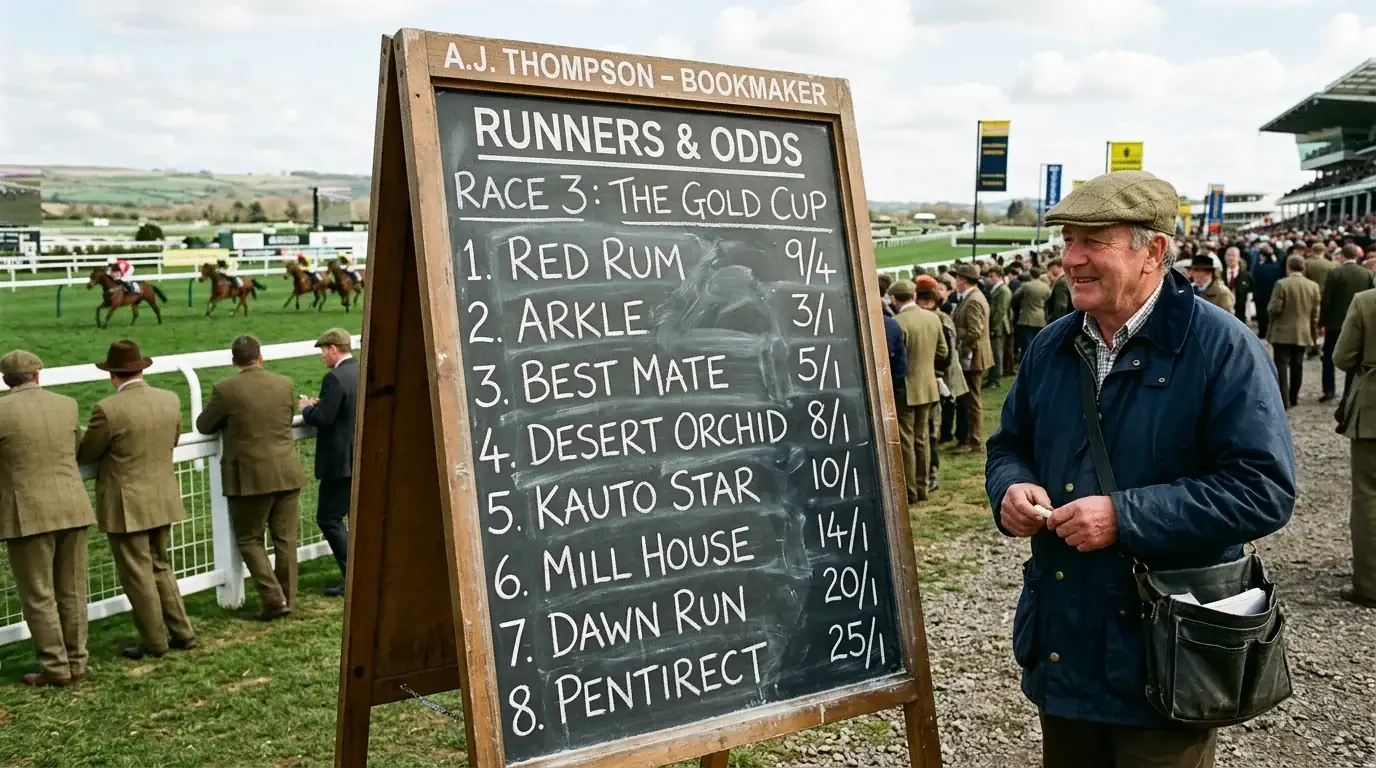
The four championship races at Cheltenham are the Champion Hurdle on Tuesday, the Queen Mother Champion Chase on Wednesday, the Stayers’ Hurdle on Thursday, and the Gold Cup on Friday. Each attracts heavy ante-post betting months in advance, and each has distinct market characteristics that shape how I approach them.
The Champion Hurdle typically produces the shortest-priced favourite of the four, often with one horse dominating the two-mile hurdling division through the season. The market concentrates on three or four realistic contenders, which means the each-way value is limited but the win market is deep and competitive at the top. I focus on whether the favourite’s price reflects genuine superiority or public sentiment inflated by media coverage. The two are not always the same.
The Champion Chase is the speed event — two miles of fencing at pace where jumping errors are punished immediately. The market is similar to the Champion Hurdle in structure but tends to produce more volatility because chase form is inherently less reliable than hurdle form. A horse that does not jump cleanly in a Grade 1 chase over two miles does not finish, regardless of ability.
The Stayers’ Hurdle over three miles attracts horses with stamina profiles that often make them overlooked in shorter races during the season. This race consistently produces bigger-priced winners than the other three championships, and the each-way market is where I concentrate my analysis. The Gold Cup is the centrepiece — three and a quarter miles of championship chasing that demands stamina, jumping accuracy, and tactical awareness. The market is the deepest of the four and the hardest to find value in because it attracts the most analytical attention.
Beyond the championship races, the festival-specific markets — Top Jockey, Top Trainer, and the ITV accumulator competitions — offer alternative angles. Top Jockey markets price up the leading riders based on expected winners across all four days, and these markets are often less efficiently priced than individual race markets because they require multi-race projections that most casual punters do not model.
Grand National Specifics — The Race Unlike Any Other
The Grand National is the anomaly. No other race in the calendar attracts the same volume of casual betting money, and that influx of recreational stakes creates market distortions you will not find anywhere else. Horses with appealing names, interesting stories, or celebrity connections attract disproportionate support regardless of their form, which pushes their prices down and creates value elsewhere in the field.
The race itself has evolved significantly following safety reviews. Modified fences, veterinary oversight, and field-size management have reduced the injury rate, but the race remains a four-mile-plus marathon over unique obstacles where the completion rate is lower than any other race on the calendar. This shapes the betting approach: backing a horse to win is a high-variance proposition in a field of up to 40 runners, which is why each-way betting dominates Grand National strategy.
Handicap weights are central to the National puzzle. The top weight carries around 11 stone 10 pounds and the bottom weight around 10 stone, but the relationship between weight and performance over four miles and two furlongs of National fences is different from a standard two-mile handicap. Stamina matters more than speed, and the ability to negotiate those fences late in the race when fatigue sets in separates contenders from passengers. I weight these factors more heavily than official ratings when assessing National runners.
Each-way terms on the Grand National vary by operator, and this variation is where the edge sits. Some bookmakers pay four places at a quarter the odds; others pay five, six, or even seven places during promotional periods. The difference between four places and seven places on a 25/1 shot is the difference between a losing bet and a profitable one if the horse finishes sixth. I check each-way terms across at least three operators before placing any Grand National each-way bet, because the terms matter more here than in any other race.
The casual money effect is real and measurable. In the weeks before the National, prices on well-known horses shorten disproportionately to their form, while less familiar runners drift. If you do your analysis early and identify horses that the casual market will ignore, the morning of the race often delivers better prices than you would get for the same horse in a standard Saturday handicap. Over 80% of bets at Cheltenham in 2024 were placed through mobile devices, and the Grand National amplifies this pattern — the majority of casual National bets arrive via apps in the hour before the race, creating a final wave of price movement that informed punters can anticipate.
Ante-Post Mechanics — Betting Before the Field Is Confirmed
Ante-post betting on festival races begins months in advance, sometimes as early as the previous year’s festival ends. The attraction is price: a horse that is 16/1 in November for the Champion Hurdle may be 5/1 by March if it wins its trials. The risk is equally clear — if the horse does not run, you lose your stake unless you took a non-runner no-bet (NRNB) price, which is always shorter.
I treat ante-post festival betting as a separate discipline from day-of-race betting because the variables are fundamentally different. When you bet ante-post, you are taking a view not just on the horse’s ability but on its health, its trainer’s plans, the ground conditions weeks in the future, and whether the race itself will attract the type of field that suits the horse. Each of those variables introduces uncertainty that day-of-race betting eliminates.
The decision framework I use is straightforward. If the current ante-post price exceeds my assessed fair price by at least 30%, I will take it without NRNB. Below that threshold, the edge is not large enough to compensate for the non-runner risk. For horses I am less certain about — borderline selections where the value is marginal — I either take the NRNB price and accept the shorter odds, or I wait for more information. For a detailed breakdown of ante-post mechanics and strategies, including the maths behind NRNB pricing, I have written a separate guide.
Timing matters. The sweet spot for ante-post Cheltenham betting is usually after the Christmas period, when the major trial races at Leopardstown, Kempton, and Cheltenham itself have clarified the form picture but before the final wave of public money compresses prices in late February. Backing too early means more non-runner risk; backing too late means the value has gone.
Discover everything about best betting horse racing here.
Extra Places at Festivals — Where the Promotional Edge Lives
Festival handicaps are where extra-places promotions deliver their strongest mathematical advantage. Operators routinely extend their each-way terms from the standard four places to five, six, or seven places on big-field festival handicaps, and this extension genuinely changes the expected value of an each-way bet.
Here is why. In a 20-runner Cheltenham handicap, standard terms pay four places at a quarter the odds. With seven extra places, your each-way bet covers finishes from first to seventh. The place part of your bet has gone from a 20% coverage of the field to a 35% coverage, while the odds on the place portion remain calculated at a quarter of the win price. That asymmetry creates positive expected value on selections you might not back under standard terms.
I run the numbers on every festival handicap that carries extra places. The calculation is simple: estimate the horse’s probability of finishing in the extra-place positions (fifth through seventh, say), multiply by the place return, and add that to the standard each-way expected value. If the combined figure is positive, the bet has value. The horses I target for extra-places bets tend to be consistent performers with high place strike rates rather than erratic types that either win or finish nowhere.
Royal Ascot’s five million ITV viewers create the promotional pressure that drives these offers — operators compete for the festival audience with enhanced terms that would not be commercially viable on a Tuesday at Wetherby. The promotional calendar peaks at Cheltenham, the Grand National, and Royal Ascot, which is exactly where you should concentrate your extra-places analysis.
TV and Streaming — Watching the Festivals
ITV holds the free-to-air broadcasting rights for the major UK racing festivals, including Cheltenham, Aintree, and Royal Ascot. This means you can watch the biggest races without a subscription, which is a significant advantage for punters who want to assess late market moves and observe horses in the paddock before the off.
Racing TV and Sky Sports Racing carry the broader schedule, including the non-ITV races at festival meetings and the undercard races that ITV does not broadcast. Both require subscriptions. For punters who primarily bet on festival racing, the ITV coverage is usually sufficient for the major races, though the additional context from Racing TV’s extended coverage — pre-race analysis, paddock shots, and post-race interviews — can inform selections for later cards.
Bookmaker streaming is the third option. Most licensed operators offer live streaming of UK and Irish racing through their apps, provided you have a funded account or have placed a qualifying bet. The quality varies by operator, and during peak festival periods the streams can lag behind the live broadcast, which matters if you are watching to inform in-running bets. I use ITV for the main races and bookmaker streams for the races ITV does not cover, switching between apps to find the most stable feed.
The practical setup for festival coverage is straightforward: ITV on the main screen for the feature races, a bookmaker app streaming the non-ITV races on your phone, and a second app open for live odds comparison. This three-screen approach sounds excessive but becomes natural after the first day, and it ensures you never miss a market move on a race you are watching.
Festival Syndicates and Tipsters — Reading the Small Print
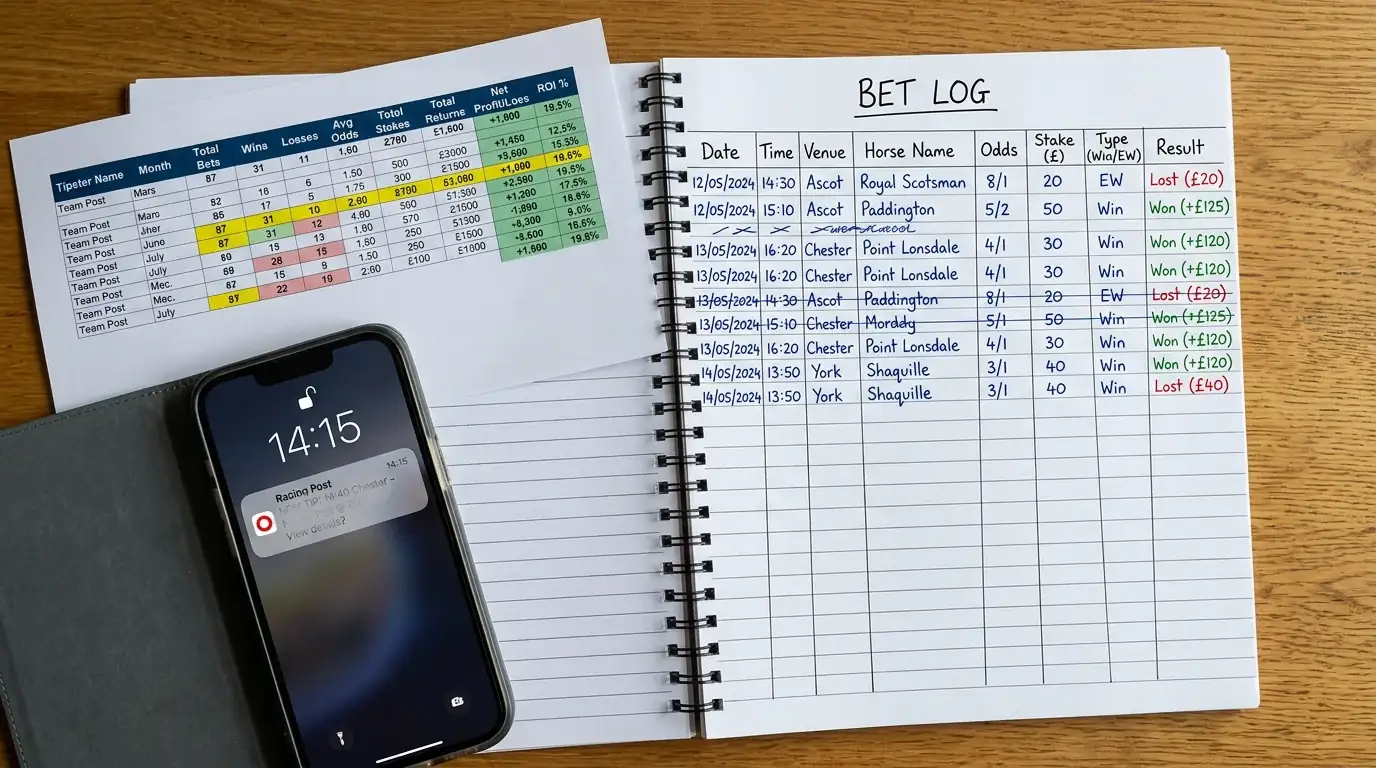
Every January, my inbox fills with tipster promotions for Cheltenham packages. Buy the four-day festival selection service for a fixed fee, receive tips by text or email, and follow the staking plan. Some of these services are run by knowledgeable analysts with verifiable track records. Most are not.
The first question to ask about any tipster is sample size. A service that boasts a 30% ROI at Cheltenham based on two years of festival tips is working from roughly 20-30 selections — a sample so small that variance alone could produce that result by chance. I want to see at least five years of documented results across all festival meetings, not just the profitable ones. The second question is whether the quoted returns account for the subscription cost. A service charging 200 pounds for festival tips needs to generate at least 200 pounds of profit above what you would have achieved independently before it has created any value.
Syndicates — groups of punters pooling bankrolls for festival betting — can work if the structure is clear: defined bankroll, agreed staking plan, transparent record-keeping, and a predetermined split of profits and losses. Most informal syndicates fail because these terms are never written down, and disagreements about staking or selection methodology surface under the pressure of a losing day. If you join one, treat it like a business arrangement, not a social activity.
Regulatory Impact on Festival Betting
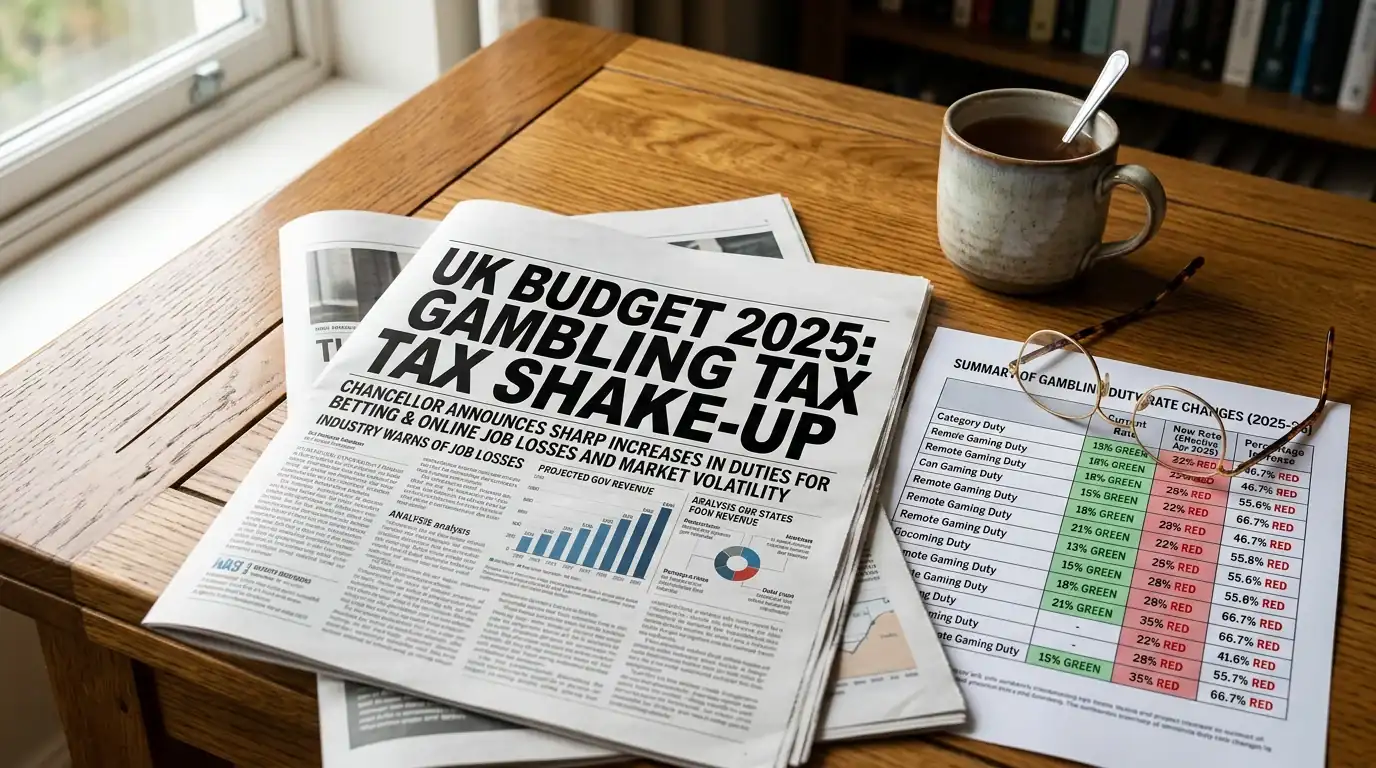
Festivals sit at the intersection of every regulatory pressure point in UK gambling. They are high-volume periods when spending spikes, which triggers affordability monitoring. They attract casual bettors who may not have established spending patterns, which complicates risk assessment. And they generate the most public attention, which means any regulatory failure is amplified by media scrutiny.
The affordability checks debate hits festival betting hardest. The proportion of punters who have been subject to these checks grew from 16.6% in 2023 to 23.7% in 2025, and the timing of these checks — often triggered by a sudden increase in activity, exactly the pattern that festival betting produces — creates friction at the worst possible moment. A punter who bets modestly for 11 months and then increases stakes for Cheltenham week may trigger a review that interrupts their betting during the four days they care about most.
Grainne Hurst, Chief Executive of the Betting and Gaming Council, has argued that forcing punters to provide bank statements is intrusive and will push customers toward the unregulated market where no safeguards exist. The data supports her concern about migration: the proportion of survey respondents admitting to using unlicensed bookmakers rose from 3.6% in 2023 to 4.9% in 2025, and among those staking 1,000 pounds or more per transaction, one in three had used a black-market operator. The 60 million pounds in unlicensed Cheltenham betting is a direct consequence of this migration.
For individual punters, the practical response is to understand the thresholds. If you plan to increase your betting activity during festivals, be prepared for the possibility of an affordability check and have your documentation organised in advance. Treating the check as an administrative task rather than a confrontation makes the process smoother and keeps you within the licensed market where your money is protected.
Safer Festival Betting — Setting Limits Before the First Race
I set my Cheltenham bankroll in January. Not in March, when excitement peaks and rational allocation feels restrictive, but in January, when I can assess my annual betting budget with cold clarity. The festival bankroll is a fixed percentage of my total annual bankroll — typically 15-20% — and once it is set, it does not change regardless of how the first day goes.
Daily limits within the festival bankroll add a second layer of control. I divide the total across four days with a slight weighting toward Thursday and Friday, when the championship races offer the deepest markets. If I lose my Tuesday allocation, I do not borrow from Wednesday. This prevents the cascading loss pattern that festival betting encourages, where a poor first day leads to over-staking on Tuesday evening’s card in a desperate attempt to recover before the midweek championship races.
The black-market temptation is real during festivals, and it targets precisely the punters who feel restricted by licensed operators. An unlicensed site offering no affordability checks, no deposit limits, and higher maximum stakes is attractive in the moment but catastrophic in its implications: no recourse for disputed bets, no GAMSTOP protection, and no guarantee that withdrawals will be honoured. The 60 million pounds wagered with unlicensed operators during Cheltenham includes money from punters who may never see their winnings paid out. The licensed market has friction, but it has protections. The unlicensed market has neither.
Your Festival Betting Readiness Checklist
Before the first race of any major festival, confirm these elements are in place: a dedicated festival bankroll set weeks in advance, daily staking limits within that bankroll, active accounts with at least two operators offering competitive each-way terms, and a clear plan for which races you will bet on and which you will skip. The races you skip are as important as the ones you back — festival cards are long, the temptation to bet every race is strong, and selectivity is what separates profitable festival punters from enthusiastic ones.
Festivals are the best time to bet on racing and the easiest time to bet badly. The difference is preparation, and preparation starts long before the first declaration is made.
How many places do bookmakers pay each-way on the Grand National?
Standard each-way terms on the Grand National are four places at a quarter the odds, but most operators extend this during the promotional period. Five, six, and sometimes seven places are common, and these terms can change in the days before the race. Always check the each-way terms with your specific operator on the morning of the race, because the extended places are a promotional decision and can vary between bookmakers and even change after initial publication.
How long before the Cheltenham Festival should I have my ante-post bets placed?
The optimal window for ante-post Cheltenham betting is typically between the post-Christmas trials in late December and mid-February. Before that, the form picture is incomplete and non-runner risk is highest. After mid-February, public money begins compressing prices and much of the value has gone. The key trial races at Leopardstown, Kempton, and Cheltenham itself in January provide the form evidence you need to make informed ante-post selections at prices that still reflect uncertainty.
Is ITV racing still free to watch for the 2026 festival schedule?
ITV holds the free-to-air broadcasting rights for the major UK racing festivals including Cheltenham, Aintree, and Royal Ascot. As of 2026, these remain available without a subscription through the ITV main channel and ITV Hub. The broader racing schedule outside these flagship meetings is carried by Racing TV and Sky Sports Racing, both of which require paid subscriptions.
Why did 60 million pounds in Cheltenham bets go to unlicensed sites?
The Betting and Gaming Council attributes this migration primarily to affordability checks that some punters find intrusive, particularly during high-activity periods like Cheltenham when spending naturally spikes. Unlicensed operators offer no such checks, which makes them attractive to punters who want to bet without friction. However, these sites operate outside UKGC regulation, meaning there are no consumer protections, no dispute resolution mechanisms, and no guarantee that winnings will be paid.
Created by the ”Best Betting Horse Racing” editorial team.