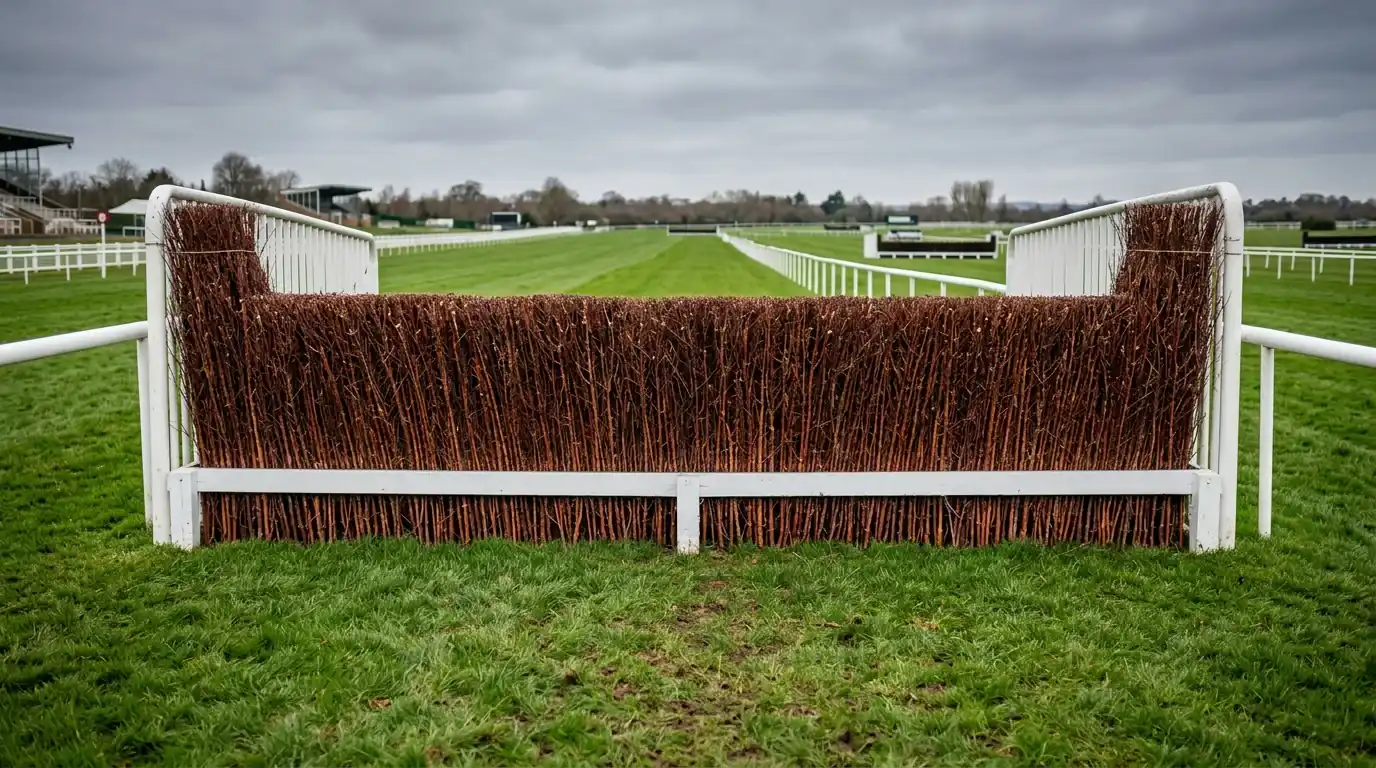
UK Horse Population in Training — Why It’s Shrinking
 Available in US
The number nobody at ITV mentions
The horse population in training in the UK on 31 March 2025 was 15,070. That figure is down from 15,359 the year before — a 1.9 per cent drop in twelve months. It continues a pattern of roughly 1.5 per cent annual decline since 2022. BHA modelling forecasts a 6-7 per cent fall in the number of runners across UK racing by 2027 versus 2024. None of these numbers appear anywhere in the commentary on a typical Saturday’s ITV racing coverage. They are the silent variable behind a lot of the structural changes punters do notice — smaller fields, fewer outsiders, tightening prices in handicaps, the disappearance of certain race types from the fixture list. The HBLB’s interim chair Anne Lambert was direct about the implications in her recent Annual Report observation that racing is facing significant challenges. The horse population is one of the most fundamental of those challenges.
The shrinkage matters to punters in ways that are not immediately obvious. Fewer horses means smaller fields. Smaller fields mean fewer place positions for each-way bets. Smaller fields mean shorter prices on favourites, less variance, and less opportunity for the outsider-each-way strategies that depend on bigger fields. The structural drivers behind the decline are well documented, and the forecasts for the next two seasons are not promising. This piece walks through the causes, the field-size implications, the quality-versus-quantity picture, and what the trend means for the betting product.
You may also find How UK Race Prize Money Is Distributed — Owners, Trainers, Jockeys interesting.
What is driving the decline
The shrinkage in the UK horse population is not random or temporary. It traces to specific economic and structural drivers that have intensified since 2022.
Cost of training. The monthly training fee for an established UK Flat or jumps yard typically runs £1,500 to £2,500 per horse per month, with additional costs for transport, vet bills, farrier work, entry fees and jockey riding fees. The annual outlay per horse can comfortably exceed £35,000 for a horse in training year-round. The cost has risen in real terms over the past decade as labour costs (stable staff, head lads, transport drivers) have outpaced general inflation.
Prize money distribution. The £153m total UK prize money in 2025 was up £4.7m on the previous year, but the increase was concentrated at Premier fixtures. Grass-roots prize money fell £3.6m. The horses that fill the bottom of the fixture list — Class 5, 6 and 7 handicaps — are running for shrinking prize funds, while their training costs continue to rise. The economic squeeze on grass-roots owners is the single biggest driver of the population decline, and the BHA’s interim chair Anne Lambert captured the underlying issue when she observed that racing is facing significant challenges.
Owner economics. Most racehorse owners lose money on their horses over the lifetime of ownership. A horse that wins twice in a season, places three times, and runs out of the frame in the rest typically produces net costs that exceed the prize money collected, before the owner has accounted for the purchase price. The economic margin has been thinning, and the share of owners who exit the sport after one or two seasons has been rising. Each exit reduces the demand for trained horses and feeds back into the population decline.
Brexit and bloodstock movement. The post-Brexit trade arrangements have complicated horse movements between the UK and Ireland, the UK and France, and the UK and other major bloodstock markets. The friction has not been catastrophic — racing operates on commercial agreements that work around the formal trade barriers — but it has added cost and complexity to bloodstock transactions, which feeds through to the population numbers over time.
Stable staff shortage. The UK racing industry has been short of stable staff for several years. The shortage limits the number of horses each yard can maintain at training-level fitness. Some yards have explicitly reduced their string size because they cannot recruit the staff to manage more horses. The staff shortage is partly a Brexit effect and partly a broader UK labour market issue, and it affects population numbers at the yard level.
For a deeper view on how prize money distribution interacts with the population decline, the UK race prize money distribution guide covers the structural economics that drive owner participation decisions.
Impact on field sizes — what the BHA models predict
The BHA’s modelling exercise published in the 2025 Racing Report projects that UK runner numbers will fall 6-7 per cent by 2027 compared with 2024. The forecast is based on the trajectory of horses in training, the typical race-frequency pattern (how many times an average horse runs per season), and the planned fixture list for 2026-27.
The mechanics of the forecast. A 1.5 per cent annual decline in horses in training, compounded over three years, produces roughly a 4.4 per cent reduction in the available pool of runners. The additional 1.5-2 per cent reduction in the forecast comes from a marginal decrease in race frequency — horses running slightly fewer times per season as owners stretch training programmes to manage costs.
The field-size implication. Fewer horses chasing the same fixture list produces smaller fields. The pattern is already visible. Average field sizes have edged downward across UK racing over the past three years, with the decline most pronounced at Core fixtures (the standard weekday cards) rather than at Premier fixtures (the marquee Saturdays and festival meetings). The 14.4 per cent year-on-year decline in Core fixture turnover during Q1 2025 reflects both the smaller fields and the reduced punter engagement that smaller fields produce.
The handicap effect. Handicaps are particularly affected because the handicapper’s job is to set weights for the field. Smaller fields produce flatter handicap weight ranges (less spread between top and bottom weight), which makes the racing more competitive on form lines but less variable on price. The 16+ runner handicaps that produce the strongest each-way value through extra-places promotions are becoming less common, and the each-way edges that depend on big fields are correspondingly harder to find.
The festival pattern. Premier fixtures and festival meetings continue to attract competitive fields because the prize money is high enough to draw entries from across the population. The big handicaps at Royal Ascot and the Ebor Festival routinely fill to the safety limit because owners target them deliberately. The smaller-field problem is concentrated at the lower-grade end of the programme, exactly where the regular-punter customer historically operated.
Learn more about best betting horse racing on our main page.
Quality versus quantity — the high-rated pool
The headline population decline is happening at the broader-pool level, not at the top end. The number of high-rated Flat horses (90+ performance figure) in training in the UK rose to 1,423 in 2025, up from 1,398 in 2024. The top of the population is growing slightly even as the broader pool contracts.
The split mechanism. The 90+ pool reflects the horses that owners are prepared to keep in training at substantial cost because they have demonstrated meaningful ability. The owner economics works better at the high-rated end — bigger prize funds, better stallion or broodmare value at the end of the career, higher resale potential. The horses that exit the population are disproportionately the lower-rated ones whose owners cannot justify the training costs against the modest prize money potential.
The implication for top-class racing. The Group race programme is well supplied with credible horses. Group 1, Group 2 and Group 3 races continue to attract competitive fields, the form lines are reliable, and the prices reflect informed market opinion. Punters concentrating on Group race form analysis are operating in a market segment that is not being hollowed out by the population decline.
The implication for lower-grade racing. Class 5, 6 and 7 handicaps and the broader grass-roots programme are where the population decline bites hardest. Fewer horses, smaller fields, less variance, narrower handicap weight ranges. The product is becoming less commercially attractive both to punters (less each-way value, shorter prices on favourites) and to owners (smaller prize funds for the same training costs).
The two-tier sport. The population decline is reinforcing the broader bifurcation of UK racing — a healthy top end and a contracting bottom end. The same pattern shows up in attendance figures, betting turnover, prize money distribution, and now in the horse population itself. The two ends of the sport are increasingly separate commercial products, and the strategic decisions about how to manage that bifurcation are the central debate in the UK racing industry for the next decade.
What this means for punters
The implications for individual punting decisions are practical and immediate.
Each-way value is harder to find. The structural advantage of each-way betting in big-field handicaps depends on the field actually being big. As 16+ runner handicaps become less common, the each-way maths shifts unfavourably. The races that still produce the each-way edges — Royal Hunt Cup, Britannia, Stewards’ Cup, Ebor — are the festival handicaps that continue to attract maximum entries. Concentrating each-way activity on these races aligns with where the structural conditions still favour the strategy.
Outsiders are scarcer. Smaller fields produce fewer outsiders. The 25/1, 33/1, 50/1 prices that historically populated 16-runner Class 6 handicaps are appearing less often in the smaller equivalents. The market depth at long prices is contracting along with the field size. Punters who specialise in outsider strategies are working with a thinner opportunity set than they had five years ago.
Favourites are shorter. Smaller fields with closer handicap weight ranges produce tighter pricing at the top of the market. A typical Class 6 handicap that would have had a 5/1 favourite in a 14-runner field five years ago might have a 3/1 favourite in a 9-runner field today. The price compression reduces the absolute returns on backing favourites and shifts the value calculations across the broader programme.
Variance is reducing. Smaller fields with shorter-priced favourites produce less variance in results. The unexpected wins by 33/1 outsiders that historically punctuated the Saturday card are becoming less frequent because the 33/1 outsiders are not in the field in the first place. The product is becoming more predictable, which reduces the entertainment value for casual punters and reduces the value-betting opportunities for serious punters.
The corollary. Concentrating activity at Premier fixtures and festival meetings (where the population decline has not bitten) is increasingly the rational positioning. Spreading activity thinly across the broader fixture list is increasingly fighting against the structural trends.
The population trend in summary
The headline numbers are clear. 15,070 horses in training on 31 March 2025, down 1.9 per cent on the year before, continuing a 1.5 per cent annual decline since 2022. 6-7 per cent fall in runners forecast for 2027 versus 2024. 1,423 high-rated Flat horses (up from 1,398) — the top is holding while the broader pool shrinks. The implications are structural: smaller fields, shorter prices on favourites, fewer outsiders, less each-way value, more concentrated value in festival meetings. The population trend is not a temporary cyclical issue. It is a structural feature of UK racing that will continue to shape the betting product for at least the next half-decade.
Are horses being exported abroad in higher numbers?
Bloodstock movement between the UK and other jurisdictions has been broadly stable in recent years, with the post-Brexit trade friction adding modest complexity but not producing a wave of exports. The decline in the UK horse population is driven primarily by domestic economic pressures on owners — training costs rising faster than grass-roots prize money — rather than by foreign demand pulling horses out of UK training yards. Some individual high-quality horses move internationally for breeding or campaigning reasons, but the broader population trend is domestically driven.
Why hasn’t prize money growth offset falling horse numbers?
The £4.7m total prize money increase in 2025 was concentrated at Premier fixtures. Grass-roots prize money actually fell £3.6m in the same period. The horses leaving UK training are disproportionately at the lower-rated end where prize money is contracting, not at the top end where prize money is growing. The headline prize money figure looks supportive but the structural reality is that the prize fund growth is not reaching the segment of the population that is being squeezed out economically.
Created by the ”Best Betting Horse Racing” editorial team.