Horse Racing Welcome Offers UK — How to Read Sign-Up Bonuses Without Getting Trapped
 Available in US
Table of Contents
- The Small Print That Costs More Than the Bonus
- Anatomy of a Welcome Offer — What You Are Actually Getting
- Bet-and-Get Versus Matched Deposit — Two Models, Different Maths
- Best Odds Guaranteed — The Concession Worth More Than Any Bonus
- Extra Places Promotions — Where Ongoing Value Hides
- Non-Runner No Bet and Money-Back Specials — Insurance or Noise
- Wagering Requirements and the Real Cash Value of Free Bets
- Red Flags in Racing Offers — What to Walk Away From
- How to Compare Offers Between Licensed Operators
- The 2026 Tax Shift and What It Means for Offer Generosity
- Before You Claim — A Punter’s Checklist
The Small Print That Costs More Than the Bonus
I once claimed a “Bet £10 Get £40 in Free Bets” offer that looked like free money. Three days later, after reading the wagering conditions properly, I realised my £40 in free bets was worth approximately £22 in withdrawable cash — and that was before I factored in the minimum odds restriction that forced me into markets I would never have touched otherwise. The sign-up offer did not cost me money directly, but it cost me time and discipline, and those are not free.
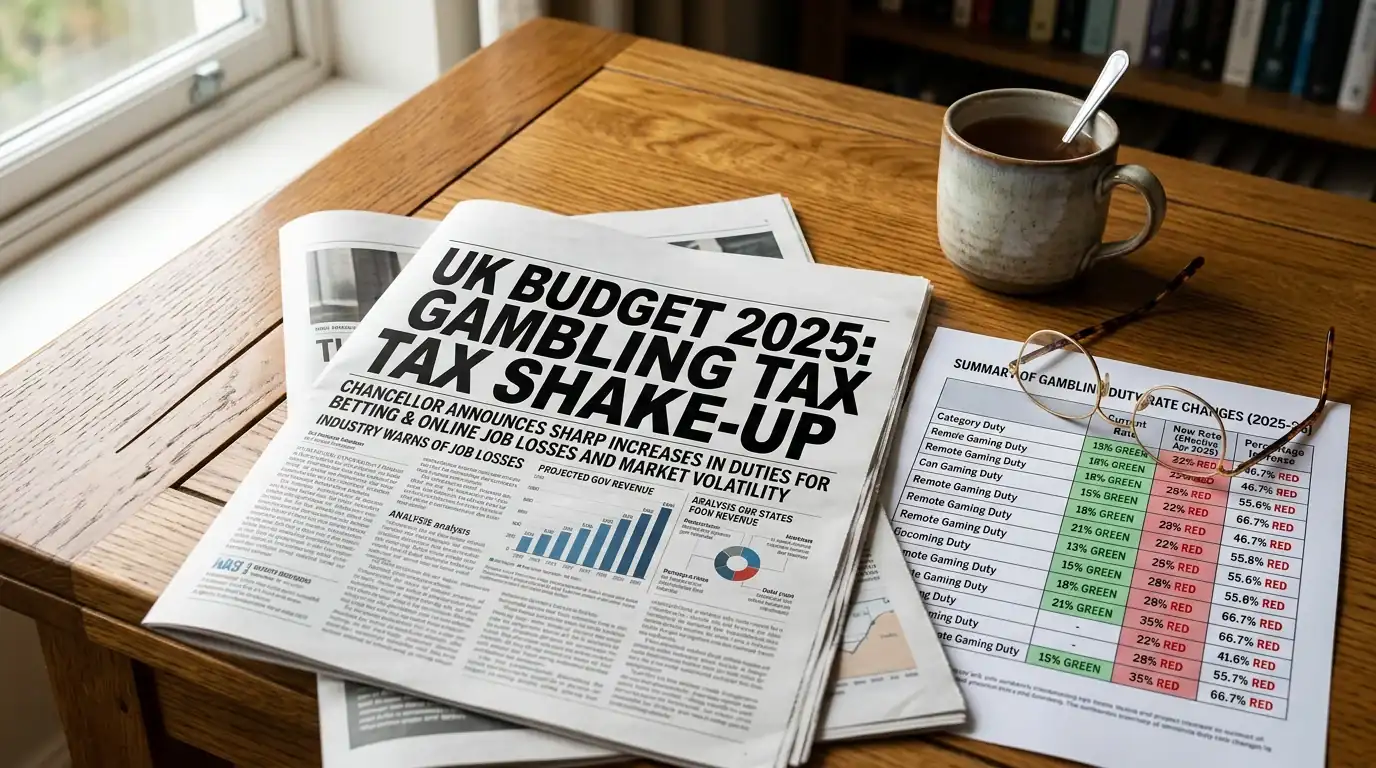
From April 2026, Remote Gaming Duty rises from 21% to 40% for online casino and gaming, while horse racing betting retains its 15% rate. That tax differential is reshaping how operators structure their promotional spend. Racing-specific welcome offers may hold their value better than casino bonuses in the near term, but operators across the board are tightening terms to absorb the fiscal hit. Understanding the anatomy of an offer has never been more important than it is right now.
This guide takes apart the mechanics of UK horse racing welcome offers — how they work, where the hidden costs sit, and how to calculate whether a promotion is worth claiming. No ranking of operators, no affiliate links, no “claim now” buttons. Just the maths that the marketing copy does not want you to see.
Check out our guide on In-Running Horse Racing Betting UK — Latency, Suspension and Cash-Out as well.
Anatomy of a Welcome Offer — What You Are Actually Getting
Every welcome offer looks generous at first glance. “Bet £10 Get £30 in Free Bets” suggests a 300% return on investment before you have even studied a racecard. But welcome offers are not gifts — they are structured products with conditions attached to every component, and unless you understand each part, you cannot evaluate the whole.
The qualifying bet is your entry fee. Most offers require a first bet at minimum odds — typically 1/2 (1.50 decimal) or higher — within a set period after registration, usually seven days. If you place a qualifying bet below the minimum odds threshold, the offer does not trigger. If you use a payment method excluded from the promotion (some operators exclude certain e-wallets), the offer does not trigger. The qualifying bet must usually be settled, not just placed, so a void or non-runner result can disqualify you entirely.
The free bet itself carries its own conditions. The most important is whether the stake is returned or not. In the majority of UK racing offers, free bets are “stake not returned” — meaning that if you place a £10 free bet at 5/1 and it wins, you receive £50 in profit but the £10 stake is not included in the payout. This is the single biggest misconception new punters have about free bets, and it reduces the effective value of every free bet by the implied probability of the outcome.
Expiry is another silent killer. Free bets typically expire within three to seven days of being credited. If you do not use them in time, they vanish. Maximum winnings caps limit what you can extract even if your free bet lands — some operators cap free bet winnings at £500 or £1,000, which rarely matters on singles but becomes relevant if you use a free bet on a large-field accumulator.
Put the components together and you see the real offer: a qualifying bet at restricted odds, followed by free bets with stake withheld, an expiry window, and a winnings cap. The headline number — “Get £30” — is a marketing figure, not a cash figure. The cash equivalent depends on what you do with those free bets, which brings us to conversion.
Bet-and-Get Versus Matched Deposit — Two Models, Different Maths
Walking into a betting shop and being handed a voucher for placing a bet feels straightforward. The online equivalent splits into two distinct structures, and the difference between them changes your expected return significantly.
Bet-and-get is the dominant format in UK racing: place a qualifying bet of a specified amount, and receive free bets of a specified value once the qualifying bet is settled. “Bet £10 Get £30” means you place a £10 bet at minimum odds, and regardless of whether it wins or loses, you receive £30 in free bets. The qualifying bet is a real bet with real risk — you can win or lose it — and the free bets arrive as a separate credit.
Matched deposit works differently: deposit a certain amount and receive a bonus of equal or proportional value. “100% Deposit Match up to £50” means you deposit £50 and receive £50 in bonus funds. This model is more common in casino promotions than in racing, but some operators apply it to sportsbook accounts. The critical difference is that matched deposit bonuses almost always carry wagering requirements — you must bet the bonus amount a certain number of times (typically 3x to 8x) before you can withdraw any winnings derived from it.
Which is better? For a racing punter who intends to bet regularly, bet-and-get is usually cleaner. The free bets arrive without wagering requirements attached to the winnings (in most cases), so the conversion to cash is a single step: place the free bet, collect the profit if it wins, and the transaction is complete. Matched deposit bonuses lock your funds into a cycle of forced betting that pushes you toward volume over selectivity — the opposite of disciplined punting.
The expected value calculation for a typical “Bet £10 Get £30” offer looks like this: if the qualifying bet is placed at evens and has a 50% chance of winning, its EV is zero. The three £10 free bets, stake not returned, placed at average odds of 3/1, each have an EV of approximately £7.50 (£10 x 0.25 probability x 3/1 = £7.50). Total expected cash value: roughly £22.50 from a £10 risk. That is genuine value — but it is £22.50, not £30.
Best Odds Guaranteed — The Concession Worth More Than Any Bonus
I spent my first year chasing welcome offers from operator to operator, hopping between accounts for the next £30 in free bets. By the end of that year, the total value extracted was respectable but the effort was exhausting. Then I calculated how much Best Odds Guaranteed had saved me across 400-odd bets on a single account — and it was more than every welcome offer combined.
BOG — Best Odds Guaranteed — is a standing concession, not a one-off promotion. If you take an early price on a horse and the Starting Price is higher, the bookmaker pays you at the better price. Back a runner at 5/1 in the morning and the SP returns 8/1? You get paid at 8/1. The reverse does not apply — if the horse shortens, you keep your early price. It is, in effect, a free option on upward price movement.
The restrictions matter, and they vary between operators. BOG almost universally applies to UK and Irish races only, on win and each-way singles. Multiples, Tote bets and most special markets are excluded. Some operators impose a maximum stake for BOG eligibility — often between £500 and £2,000 — and a handful exclude certain race types, such as apprentice or conditional jockeys’ races. Always check the specific terms on your account.
Why is BOG more valuable than a welcome offer? Because it operates on every qualifying bet you place, not just the first one. A punter who places 300 racing bets per year at an average early price of 4/1, where the SP exceeds the early price on roughly 30% of occasions by an average of one tick, generates approximately 90 BOG upgrades annually. The cumulative uplift is substantial and compounds with volume. For a detailed breakdown of all BOG eligibility rules and edge cases, the dedicated guide covers the mechanics in full.
Welcome offers expire the moment you claim them. BOG keeps working every time you bet. For regular racing punters, it is the single most important concession on the menu — and it does not require a promotional code.
Extra Places Promotions — Where Ongoing Value Hides
Festival Saturday at Ascot, sixteen-runner heritage handicap, and one bookmaker is paying six places on the each-way instead of four. The punter next to me at the track was backing the same horse with a different operator paying standard terms. Same selection, same stake, same odds — but a different expected return. That is the quiet power of Extra Places promotions.
Extra Places extend the number of finishing positions that qualify for an each-way payout. Standard terms on a sixteen-plus runner handicap pay four places at one-quarter odds. An Extra Places promotion might pay five, six, or even seven. The win portion of the bet is unaffected — but the place portion now covers a wider range of outcomes, which increases the probability of a partial return.
The edge calculation is worth running through. Assume a twenty-runner handicap at standard terms: four places give a 20% random place probability. At six Extra Places: 30% random place probability. The place odds remain at one-quarter of the win price. For a horse at 12/1, the place return is 3/1 in both scenarios — but the chance of collecting that 3/1 has jumped by half. If you are systematic about identifying Extra Places races and routing your each-way bets to the operator offering the most places, the cumulative impact over a season of festival handicaps is measurable.
Extra Places are typically offered on the biggest races of the week — ITV-broadcast handicaps, feature festival races, and Saturday cards. They are not available on every race, and the number of additional places varies between operators and between meetings. Checking the Extra Places tab before you place an each-way bet is a 30-second habit that materially improves your long-term returns.
Non-Runner No Bet and Money-Back Specials — Insurance or Noise
Ante-post betting on the Cheltenham Gold Cup six weeks out carries a specific risk: your horse might not run. Injury, change of plans, a trainer redirecting to a different target — any of these can turn a carefully researched bet into a dead receipt. Non-Runner No Bet is the concession designed to remove that risk, and for ante-post markets it genuinely changes the calculation.
Under NRNB terms, if your selection does not run in the race, your stake is returned in full. Without NRNB, ante-post bets are settled as losers if the horse is withdrawn — that is the standard rule and it catches new punters every year. Some operators offer NRNB on selected ante-post markets, particularly for major festivals, while others extend it only within a specific window (for example, from five days before the race). The terms vary, and checking whether NRNB applies before placing an ante-post wager is not optional — it is essential.
Money-back specials cover a different kind of misfortune. “Money back if your horse falls at the last” or “Money back if beaten by a length or less” are promotional concessions that refund your stake (usually as a free bet, not cash) under specific conditions. Faller insurance is genuinely useful in National Hunt racing where falls are common — the Grand National alone sees multiple fallers every year. Beaten-by-a-length offers are more marginal: the probability of triggering the condition is low enough that the promotion’s expected value is small.
The distinction between useful insurance and marketing noise comes down to frequency. NRNB on ante-post markets addresses a risk that occurs regularly. Faller insurance on jumps races addresses an event that happens often enough to matter. “Money back if X scores a hat-trick” on a specials market is a lottery trigger with near-zero probability — it exists to generate headlines, not to improve your returns.
Wagering Requirements and the Real Cash Value of Free Bets
A colleague once described free bets as “chips you cannot cash.” That is not quite right, but it captures the essence of the problem. A £30 free bet is not £30 in your pocket — it is an instrument with a conversion rate, and that rate depends on the odds, the wagering conditions, and the stake-return policy.
Most UK horse racing free bets are “stake not returned.” If you place a £10 free bet at 4/1 and it wins, you receive £40 profit but the £10 stake is retained by the bookmaker. Your actual return is £40, not £50. This single condition reduces the expected value of every free bet by a predictable margin. At average odds of 3/1, the expected return of a stake-not-returned free bet is approximately 60-65% of its face value. A £30 free bet is worth roughly £18-20 in real cash terms.
The conversion ratio improves at longer odds because the stake becomes a smaller proportion of the total return. A £10 free bet at 10/1 returns £100 in profit — the missing £10 stake represents only 9% of the payout. At 1/1, the same free bet returns £10 profit, and the missing stake represents 50%. This is why experienced offer-claimers deploy free bets on longer-priced selections: the conversion to cash is more efficient.
Wagering requirements are a separate mechanism, more common on casino bonuses but occasionally applied to sportsbook promotions. A 3x wagering requirement on a £30 bonus means you must place £90 in total bets before any winnings derived from the bonus become withdrawable. During those £90 of forced turnover, the bookmaker’s margin extracts its share. At a 5% average margin, the expected cost of a 3x wagering requirement on a £30 bonus is approximately £4.50 — reducing the real value from £30 to around £25.50 before you even consider variance.
The practical takeaway is to calculate the expected cash value before you claim. Face value minus stake-not-returned loss minus wagering friction equals your real number. If that number is still positive after accounting for the time and the forced betting patterns, the offer is worth taking. If not, your energy is better spent finding value in the actual racing markets.
Discover everything about best betting horse racing here.
Red Flags in Racing Offers — What to Walk Away From
Not every offer is created equal, and some are designed to extract more from you than they give. After nine years of examining promotional terms, I have compiled the warning signs that reliably indicate an offer is not worth the friction.
High wagering requirements on sportsbook bonuses — anything above 5x — mean you are being funnelled into volume betting. At a 5% house edge per turnover cycle, a 10x wagering requirement costs you roughly 50% of the bonus value in expected margin loss before you can withdraw. The bonus is not a bonus; it is a mechanism to generate turnover.
Maximum odds restrictions on free bets are a subtler trap. If your free bet can only be placed at odds of 5/1 or shorter, the conversion rate drops because you lose the efficiency advantage of longer prices. Some operators restrict free bets to odds of 2/1 or 3/1, which reduces the expected cash value to barely 40-50% of face value.
Short expiry windows — 24 or 48 hours — pressure you into betting hastily. Good racing bets require time: studying the card, checking the going, waiting for market formation. A free bet that expires before the next decent race at your preferred course is engineered to make you bet badly, not well.
Low maximum winnings caps on free bets limit your upside even when you find genuine value. If a £10 free bet carries a £100 maximum win, you cannot use it on a 20/1 outsider that you actually fancy — the ceiling cuts your return in half. This restriction disproportionately harms punters who use free bets on the higher-value selections where they are most efficient.
Finally, watch for operators that restrict eligible markets. If a racing free bet can only be used on “selected races” or “feature races,” your choice is being narrowed to markets where the operator’s margin is highest. A genuinely valuable free bet lets you use it on any UK or Irish race at your discretion.
How to Compare Offers Between Licensed Operators
Here is an exercise I run every January: I list the welcome offers from ten UKGC-licensed racing bookmakers, strip out the headline numbers, and score them on five factors. The results are consistently surprising — the biggest number rarely wins.
The five factors are: qualifying bet risk (how much you must stake and at what minimum odds), free bet face value, stake-return policy, expiry window, and maximum winnings cap. I assign a score from 1 to 5 on each and weight them equally. A “Bet £10 Get £50” offer with a 24-hour expiry, 3/1 minimum odds on free bets, and a £200 maximum win will score lower than a “Bet £10 Get £20” with 30-day expiry, no minimum odds restriction, and a £1,000 cap. The latter gives you more usable value despite the smaller headline number.
There is a sixth factor I track separately: whether the operator also offers Best Odds Guaranteed, Extra Places, and NRNB as ongoing concessions. An operator with a modest welcome offer but strong ongoing concessions delivers more value across a season than one with a generous sign-up bonus and thin ongoing terms. The welcome offer is a one-time event; the concessions compound with every bet you place.
One critical point: only compare UKGC-licensed operators. The number of unique visitors to 22 unlicensed sites offering UK racing bets grew by 522% between 2021 and 2024. Those sites may advertise larger bonuses with fewer restrictions, but they operate outside any regulatory framework — no dispute resolution, no fund segregation, no affordability safeguards. A £100 bonus on an unlicensed site is worth exactly nothing if you cannot withdraw your winnings.
Build your own scoring matrix, update it annually, and make the decision on data rather than on whichever banner advert you saw last. The framework matters more than any single comparison, because operator terms change faster than any guide can track.
The 2026 Tax Shift and What It Means for Offer Generosity
The October 2025 Budget redrew the fiscal map of UK gambling. Remote Gaming Duty jumped from 21% to 40% — the highest rate in the world for online casino — while horse racing betting was explicitly protected at 15%. The Chancellor was blunt about the reasoning: online gaming carries the highest harm risk and should bear the greatest tax burden. The racing carve-out was a nod to the sport’s economic footprint: 85,000 jobs and over £4 billion contributed to the economy annually.
Grainne Hurst, the Betting and Gaming Council’s Chief Executive, called the tax increase a devastating blow to the industry and its workforce. She was not exaggerating the commercial impact. The House of Commons Library estimated the gambling tax reforms would raise £810 million in additional revenue in 2026/27, rising to £1.16 billion by 2030/31. That revenue has to come from somewhere, and a significant portion will be clawed from promotional budgets.
For horse racing welcome offers specifically, the short-term effect is paradoxical. Because racing betting retained its 15% duty rate, operators have more headroom to fund racing-specific promotions than they do for casino or general sports bonuses. In the medium term, however, the pressure on overall profitability will compress promotional spend across all verticals. Expect fewer “headline grabber” offers, tighter terms on the offers that remain, and a shift toward concession-based value (BOG, Extra Places) rather than cash bonuses.
The practical implication for punters is straightforward: the window for generous welcome offers in racing is narrowing. Operators will increasingly use ongoing concessions to retain customers rather than front-loaded bonuses to acquire them. If you are going to claim welcome offers, do it with clear eyes on the terms, and build your long-term strategy around the concessions that survive the tax squeeze.
Before You Claim — A Punter’s Checklist
Every welcome offer should pass five tests before you commit a penny. Is the qualifying bet at odds you would take anyway? Is the free bet stake returned or not? Does the expiry window give you time to find a bet worth placing? Is the maximum win high enough to let you use the free bet efficiently? And does the operator offer ongoing concessions — BOG, Extra Places, NRNB — that make the account worth keeping after the welcome offer is spent?
If the answer to three or more of those is no, the offer is not worth your time. The sign-up bonus is the start of a relationship with an operator, not a transaction in isolation. The best offer is the one attached to the best ongoing terms — and the worst is the one that trains you to bet badly before the real punting begins.
What does ‘stake not returned’ mean on a free bet?
When a free bet is stake not returned, the bookmaker pays out your winnings but keeps the original free bet stake. A £10 free bet at 5/1 returns £50 profit, not £60. The £10 stake is deducted from the payout. This reduces the effective cash value of every free bet compared to a normal bet where your stake is returned along with the profit.
How is the cash value of a £30 free bet actually calculated?
The expected cash value depends on the odds at which you use the free bet. At average odds of 3/1 with stake not returned, each £10 free bet has an expected value of roughly £6-7 based on the implied probability of winning. A £30 package of three £10 free bets is therefore worth approximately £18-21 in real cash. Using free bets at longer odds improves the conversion rate because the withheld stake becomes a smaller proportion of the total return.
Do welcome offers count towards Best Odds Guaranteed?
The qualifying bet in a welcome offer is a real bet and typically qualifies for BOG if placed on an eligible UK or Irish race at early prices. The free bets received as part of the offer also qualify for BOG in most cases, provided they are placed as win or each-way singles on eligible races. Check the specific operator terms, as some exclude free bets from BOG eligibility.
Will the 2026 Remote Gaming Duty change shrink horse racing welcome offers?
Horse racing betting retained its 15% duty rate while online casino duty rose to 40%, so racing-specific offers have more fiscal headroom than casino bonuses. However, the pressure on overall operator profitability will compress promotional budgets across all verticals over time. Expect tighter terms and smaller headline figures, with a shift toward ongoing concessions like BOG and Extra Places rather than large front-loaded bonuses.
Written by the editors at Best Betting Horse Racing.