Best Odds Guaranteed Explained UK — When BOG Actually Pays
 Available in US
The concession that quietly funds half the UK punting margin
I have a spreadsheet from 2023 that I still glance at when I am writing about Best Odds Guaranteed. It records every horse I backed at an early price that drifted into a longer starting price over a six-month period. The difference between my early-price returns and what I would have got at SP came to just over four per cent of total turnover. That is the entire margin between a profitable punter and a losing one across most strategies — and BOG was the only thing protecting it.
Best Odds Guaranteed, almost always abbreviated to BOG, is a concession applied to UK and Irish racing by every major bookmaker that wants serious punting volume. The mechanic is straightforward in principle. You back a horse at an early price. If the starting price comes in longer than your early price, the bookmaker pays you at the higher SP rather than the price you took. If the SP comes in shorter, you keep your early price. Heads you win, tails you also win. Sounds like a giveaway. It is not, and the conditions wrapped around BOG are where most of its advertised value quietly disappears.
Total betting turnover on UK racing fell by nine per cent in the first quarter of 2025, and operators reacted by tightening BOG eligibility rules without making much noise about it. This guide unpacks how BOG actually pays, the typical restrictions that gut its value, and the situations where it remains the single most important offer in racing for a regular bettor.
Check out our guide on Betfair Exchange Horse Racing UK — Backing, Laying and Commission as well.
The mechanic in two numbers — early price and SP
The cleanest way to understand BOG is with a single race in front of you. You back a horse at 5/1 the night before. The race goes off, and the SP returned by the on-course market is 7/1. With BOG, your bet is settled at 7/1. Without BOG, you collect at 5/1 and watch the price drift cost you eight pounds on a tenner.
The mechanic is one-way only, which is the part bookmakers do not always emphasise. If you backed at 5/1 and the SP came back at 4/1, you keep 5/1. The early price is the floor. The SP is the ceiling when it pays better. That asymmetry is the entire value of the concession to a punter.
Worked example with full numbers. £10 win-single at 5/1. SP returns at 7/1. Settled at 7/1: winnings £70, plus £10 stake returned, total £80. Without BOG, you would have collected £60 (5/1 × £10) plus stake, total £60. The BOG bonus on that bet was £20. Now reverse it. £10 at 5/1, SP returns at 4/1. Settled at 5/1: winnings £50, plus stake, total £60. BOG made no difference because the price moved your way at the off.
The Racing Post Big Punting Survey work suggests regular punters take BOG-eligible early prices on roughly 60 per cent of their bets across a typical month. For those punters, the average uplift from BOG over a season runs at two to three per cent of total turnover — easily worth the search for an early price.
Typical restrictions — where the concession actually shrinks
Every bookmaker that offers BOG attaches conditions, and the conditions are not standard. Reading them is the difference between a concession that works and one that returns nothing on the bets you most want it to cover.
The common restrictions across UK operators are predictable enough. BOG almost always applies to UK and Irish racing only — international racing is excluded across the board. The concession typically covers win and each-way singles. Accumulators are usually excluded entirely, though one or two operators run “best odds guaranteed on accas” as a time-limited promotion. Tote and pool bets sit outside BOG by definition because they have no early price. Specials markets, antepost futures and forecast or tricast bets are generally excluded.
Apprentice races. This is the restriction that catches people out most often. Several operators exclude apprentice-only races from BOG because the prices move violently in the final fifteen minutes when the riding allowances clarify and the market can see what conditional jockey has actually been booked. The price volatility makes BOG painful for the bookmaker, so they exclude the races. If you back a horse in an apprentice race at 8/1 and it goes off at 14/1, no BOG, no extra payment. The terms will say “selected races excluded” and the apprentice fields are usually what they mean.
Maximum stake limits matter on bigger bets. Most operators cap BOG at a maximum stake — commonly £100 to £500 win-single, sometimes lower on accounts that have been flagged. Above the cap, the bet is taken but BOG does not apply on the portion above the limit. The cap is rarely publicised in the marketing material and tends to live in the terms and conditions for that operator’s racing promotions.
Account restrictions are the other quiet limit. If your account is on a price-shopping watchlist, BOG can be removed without notification on specific selections or for specific stakes. The Big Punting Survey work shows around a quarter of regular punters have had restrictions imposed on at least one account. The pattern usually starts with BOG being silently dropped on certain bets before stake limits follow.
Early price or SP — the timing call
BOG only matters when you take an early price, so the question of when to bet early and when to wait for SP is the operational question that determines whether the concession is doing any work at all.
The case for taking the early price. If you believe a horse is overpriced relative to its chance, locking in a long price ahead of the market shortens. The early-price market is thin and less efficient than the on-course market that forms in the final twenty minutes, so genuinely underpriced selections tend to be available at better odds early. If the SP drifts longer than your early price, BOG pays the difference. You give up nothing.
The case for waiting for SP. If you have no read on whether the horse is over or underpriced, the SP is a fair reflection of informed money and you do not need BOG protection because you have no price advantage to protect. The same logic applies in fast-moving markets where the early price is volatile and the on-course money is well-informed — sometimes the SP genuinely represents the right price and the early-price market is misleading.
In practice, the right answer is that BOG turns the timing call into a free option for the punter. You can take the early price you believe is the right price, and if you are wrong about the price hardening, BOG pays you the SP. The only situation where waiting is genuinely better is when you cannot get on at the early price you want — restricted accounts, low stake limits, or markets where the operator has slashed the early price below SP value before you arrive.
Discover everything about best betting horse racing here.
Handicaps — where BOG earns its keep
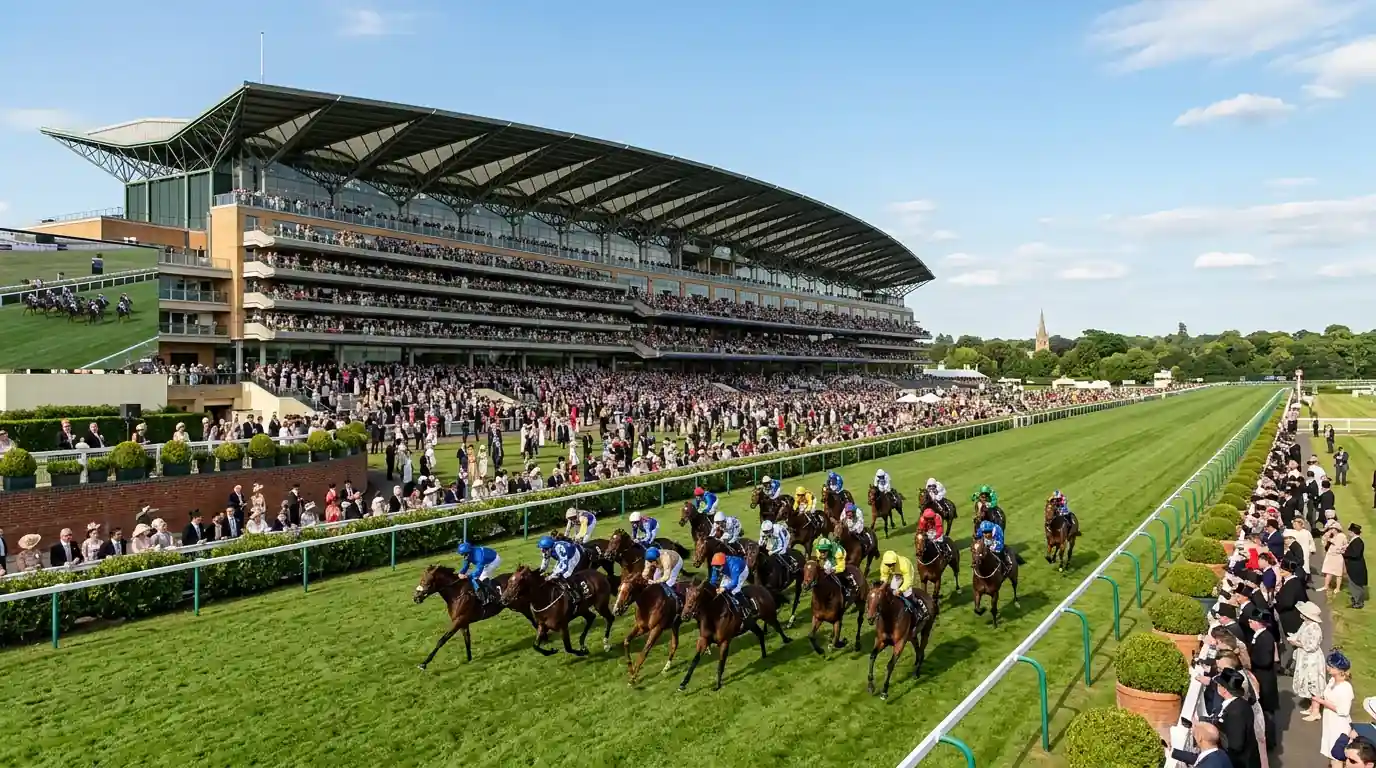
BOG matters most in handicap races, and the maths behind that is straightforward. Handicap prices move further between morning and off than any other market in racing. Eight-runner Group races barely budge in the final hour. Sixteen-runner Royal Ascot handicaps can see prices drift four or five points on horses that morning sites listed at single figures.
The volatility comes from several sources. Late market moves on inside information about the going, weight changes from final declarations, late jockey bookings, and money chasing live information about gallops or trial reports. The first three concentrate in the final two hours before the race. The fourth runs through the day from when the markets first open.
That volatility is precisely where BOG pays. A horse that opens at 6/1 in a Wokingham handicap and goes off at 10/1 has drifted four points. Without BOG, you collected at 6/1 and missed out on £40 of winnings on a £10 stake. With BOG, you collect at 10/1 and the concession has paid for itself many times over on a single bet. The Big Punting Survey shows BOG returns are skewed heavily toward handicap-race bets — perhaps eighty per cent of the lifetime BOG bonus a regular punter receives comes from handicaps rather than from non-handicap or Group-race bets.
The corollary is that BOG matters less for short-priced non-handicap favourites. A horse opening at 6/4 in a five-runner novice chase rarely drifts to 5/2, and the BOG bonus when it does is small in absolute terms. The concession does its real work on mid-priced and longer-priced handicap selections where the price ranges in the final hour are wide.
Why BOG matters more than a welcome offer
A welcome offer pays out once. BOG pays out across every UK and Irish racing bet you ever place with that operator. Run the maths over a year of regular punting and BOG quietly outweighs almost every advertised sign-up bonus, even the ones that look generous in isolation. That is the single most useful fact in the whole racing-promotions landscape, and it is exactly the kind of comparison that comes through in the broader picture of UK horse racing welcome offers.
Does BOG apply to accumulators or only single bets?
On most UK operators, BOG applies only to win and each-way singles on UK and Irish racing. Accumulators are typically excluded from BOG as a permanent condition. A small number of operators run time-limited ‘BOG on accas’ promotions, but these are promotional rather than standing terms and require checking the offer page each time.
Why do some operators exclude apprentice races from BOG?
Apprentice races have very volatile prices in the final fifteen minutes because the market only sees the actual conditional jockey booking close to the off, and riding allowances move the form lines significantly. The volatility makes BOG painful for operators to underwrite at scale, so several exclude apprentice-only races as a category from the concession.
Prepared by the Best Betting Horse Racing editorial staff.