Horse Racing Attendance and Audience UK — What 5 Million Means
 Available in US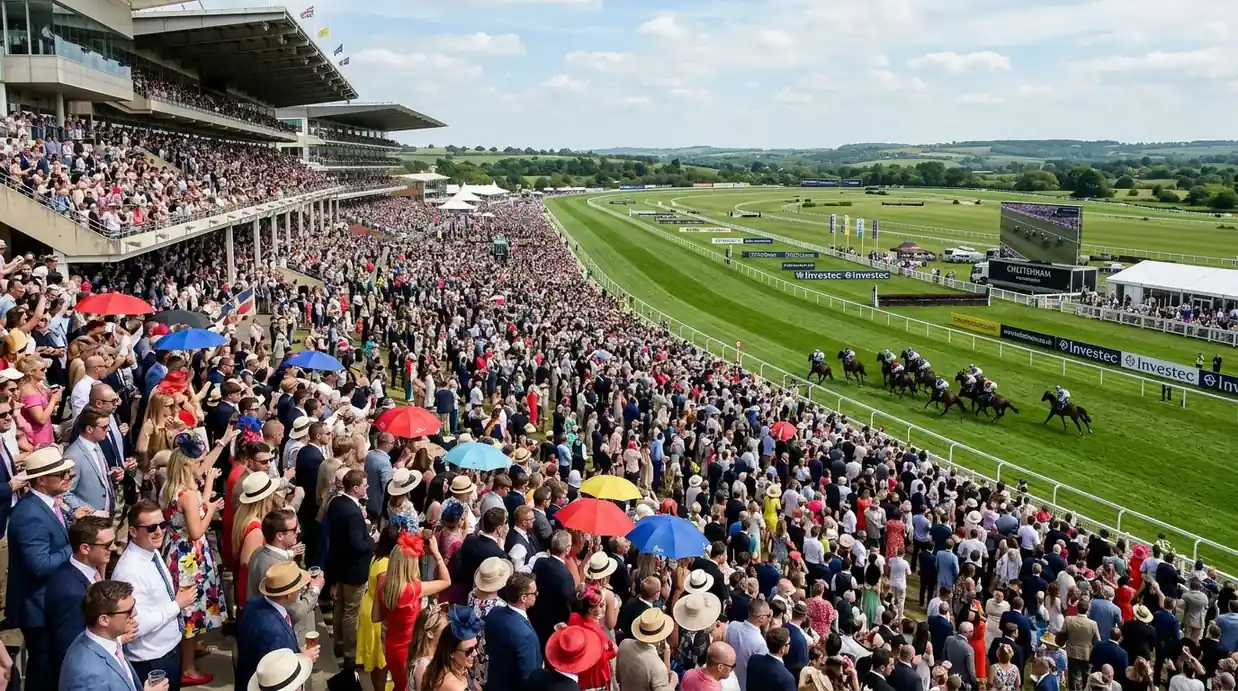
Two graphs going in opposite directions
For the past three summers, I have been running a small experiment with friends who do not normally bet on racing. I ask them whether UK racing is in growth or decline. About three-quarters say decline. Their evidence is the headlines about turnover falling, affordability checks driving punters offshore, prize money pressure on grass-roots fixtures, and the steady decrease in horses in training. The other quarter say growth, and their evidence is that they themselves have been to the races more often in the past two years than in the previous five — Royal Ascot, Goodwood, a local Saturday meeting at Brighton. Both answers are correct simultaneously, which is the entire story of UK racing in 2026.
UK racecourse attendance reached 5.031 million in 2025 — the first time above five million since 2019, with a 4.8 per cent rise on the previous year. Online betting turnover on UK racing fell 9 per cent in Q1 2025 on the same period in 2024, with average turnover per race on Core fixtures down 14.4 per cent. Two graphs going in opposite directions on the same product. The divergence is not a temporary anomaly — it is a structural feature of the modern UK racing market, with attendance growing on the back of festival experiences and TV-driven engagement while online betting volume contracts under regulatory pressure.
This piece walks through the attendance figures, the contrast with online turnover, the ITV audience numbers, the demographic shifts, and what the divergent picture means for punters.
You may also find Horse Racing Bet Types UK — Win, Each-Way, Forecast and Multiples Explained interesting.
Attendance versus betting volume — the structural divergence
The 5.031 million attendance figure is concentrated heavily at festival meetings and Premier fixtures. Royal Ascot, Cheltenham, Aintree, Glorious Goodwood, the Ebor Festival at York, Epsom Derby weekend, and a handful of Saturday meetings together account for a disproportionate share of the annual total. The average attendance per fixture rose 3.6 per cent to 3,526 in 2025, reflecting both more people per fixture and slightly fewer fixtures overall.
The online turnover picture. Q1 2025 saw a 9 per cent decline in total betting turnover on UK racing versus Q1 2024. The decline was uneven — Premier fixture turnover rose 2.7 per cent while Core fixture turnover fell 14.4 per cent. The pattern echoed Q3 2025, when the cumulative annual decline reached 4.2 per cent on 2024 and 12.8 per cent on 2023. The trend over multiple quarters is consistent: the bottom of the racing programme is contracting in betting terms, while the top is holding up or growing.
Why both can be true. Attendance is driven by the festival experience — TV coverage, hospitality packages, group attendance, food and entertainment as much as the racing itself. Betting volume is driven by regular punters placing routine stakes across the broader fixture list. The two customer profiles overlap but are not identical. The growth in attendance reflects success at attracting the festival-experience customer; the decline in betting volume reflects the regulatory and commercial pressures squeezing the regular-punter customer.
The implication. The racing product is being repositioned as a leisure experience rather than primarily as a betting medium. Racecourses, broadcasters and operators all benefit from festival attendance growth — racecourses through admissions and hospitality, broadcasters through audience figures, operators through the high-volume betting bursts around festival days. The regular-punter customer base, which historically funded the betting infrastructure that supports the sport through the Levy, is contracting. The BHA’s director of racing observed in the 2025 quarterly report that total betting turnover fell nine per cent compared with the same period in 2024 and that there would be a wide range of factors contributing to this concerning decline. The director was careful not to attribute the decline to a single cause because the actual mix of drivers is complex and varies by customer segment.
ITV racing — the audience that drives betting bursts
ITV’s free-to-air horse racing coverage is the single biggest broadcast driver of UK racing engagement, and its audience figures correlate closely with betting volume spikes around the covered races.
The Royal Ascot benchmark. Five million viewers watched Royal Ascot on ITV in 2025, with the Saturday audience up more than 20 per cent on the previous year. The figure is the largest of any UK racing TV audience in the calendar and the multi-day platform that the Royal Ascot week provides for racing.
The Cheltenham benchmark. The Cheltenham Festival typically draws comparable audience figures, with Gold Cup Friday traditionally the biggest single-day audience for jumps racing. The combination of Cheltenham and Aintree in March and April produces the largest sustained audience window for jumps racing, mirroring the role Royal Ascot and Goodwood play for Flat racing in June and July.
The audience-to-betting correlation. ITV coverage drives measurable betting spikes on the races they cover, particularly among casual punters whose betting activity correlates with TV exposure. The pattern is consistent enough that operators time their festival promotion spend around ITV’s coverage schedule. The pattern also matters for racing’s broader commercial argument — the visibility on free-to-air TV is what makes the betting volume sustainable.
The non-ITV gap. Racing TV and Sky Sports Racing run dedicated subscription channels covering the bulk of UK racing not shown on ITV. The subscription audiences are smaller but more engaged — they are regular punters with established betting routines, contrasted with ITV’s broader casual audience. The two audiences serve different commercial purposes and the operators allocate their marketing accordingly. For more on how the Cheltenham and Grand National meetings contribute to the betting calendar, the Cheltenham and Grand National betting guide covers the jumps festival anchors.
The structural lesson. Free-to-air TV coverage is the recruiting funnel for casual punters who later become regular punters. Cutting ITV’s coverage — even reducing it modestly — would damage the long-term betting volume in ways the short-term betting spikes do not capture. The sport’s commercial case for ITV coverage rests on this longer-term funnel rather than purely on the day-of-race betting volumes.
Learn more about best betting horse racing on our main page.
Demographic shifts — who is actually attending
The 5.031 million attendance figure masks a notable demographic shift in who is attending UK racecourses. The shift has been visible across the past five years and is now embedded in the broader pattern of racing engagement.
Younger festival attendees. The major festival meetings have attracted a younger demographic over the past decade through deliberate marketing — group ticket packages, music nights, food festivals tied to race days, and social-media engagement aimed at 25-40 year-olds. The festival crowds at Royal Ascot, Glorious Goodwood, the Ebor Festival, and Cheltenham now skew younger than the racecourse crowds of fifteen years ago. The shift has supported attendance growth but does not always translate into the regular-punter behaviour that drives betting volume.
The older regular-punter core. The regular-punter customer base — the people placing routine bets across the broader fixture list throughout the year — skews older. The Racing Post Big Punting Survey work consistently shows the median regular punter is over 45 and has been betting on racing for more than a decade. This is the customer base that the affordability check regime affects most strongly because their bet patterns are visible to the operator risk systems through long account histories.
The contrast in outcomes. The younger festival attendees are growing the racing audience but tend to bet less frequently between festivals. The older regular-punter base is shrinking through attrition (deaths, retirements from punting, account restrictions) without being replaced at the same rate by younger regulars. The result is the divergent picture: attendance up, betting turnover down.
The future-customer question. The strategic question for the racing industry is whether the younger festival attendees will become the regular-punter base of the future. The industry’s commercial case rests on the assumption that they will. The Racing Post Big Punting Survey data is mixed — some younger festival attendees do progress to regular-punter status, but the conversion rate is lower than in previous generations, partly because the regulatory environment makes the regular-punter experience less appealing than it was historically.
What the divergence means for punters
The practical implication of the attendance-versus-turnover divergence is that the racing product is becoming structurally bifurcated, and the punter experience varies depending on which part of the product you are engaging with.
Festival attendance as an information edge. Punters who attend major festival meetings in person have access to information that TV punters do not. Paddock inspection lets you assess the horses’ physical condition before the race. The walking ring shows which horses are sweating, which are travelling well, which are unsettled. The going underfoot is visible directly. The pace at which the field passes the post in the first race tells you about the prevailing conditions for the rest of the day. The information advantage of live attendance is genuine but modest — the markets price in most observable factors quickly — and it does not replace the foundational form analysis.
TV punting and its limits. Punting from a TV screen at home gives you race commentary, pundit analysis and slow-motion replays, but no paddock view, no walking ring assessment, no in-going feel. The TV punter is working with the same data as the on-course punter for form analysis but lacks the live observational layer. The gap matters more at festival meetings where conditions can change through the day than at routine weekday cards where the going is unlikely to shift between morning and afternoon.
The two-tier betting environment. Premier fixture turnover holding up or growing suggests operators are competing aggressively for festival-day volume — better prices, extra-places promotions, BOG terms, generous customer treatment. Core fixture turnover declining suggests operators are pulling back on the regular-punter product — restrictions arrive earlier, prices are tighter, concessions are thinner. The same operator can deliver materially different experiences depending on which part of the product the customer engages with.
The implication for bet selection. Concentrating betting activity on Premier fixtures and festival meetings aligns with where the operator-side competition is most aggressive and where the customer experience is least restricted. Spreading betting activity thinly across the broader fixture list aligns with where the operator-side pressure is greatest and where account restrictions accumulate fastest. Neither approach is wrong, but the two approaches produce materially different customer experiences over time.
Two parallel markets, one sport
The headline numbers tell the story without much commentary. 5.031 million attendance in 2025 — first time above five million since 2019. Q1 2025 betting turnover down 9 per cent on Q1 2024. Premier fixture turnover up 2.7 per cent, Core fixture turnover down 14.4 per cent. Five million viewers for Royal Ascot on ITV. The two graphs going in opposite directions are the structural reality of UK racing in 2026 — a sport that is succeeding at the festival-experience customer level while contracting at the regular-punter level. The implications for punters depend on which customer profile they identify with. The festival-experience customer is being courted; the regular-punter customer is being managed. Both are participating in the same sport, but they are in different markets within it.
Why is racecourse attendance growing while online turnover falls?
The two trends reflect different customer profiles. Attendance growth is driven by the festival-experience customer — younger, more occasional, attending for the social and entertainment aspects as much as the betting. Online turnover decline is driven by pressure on the regular-punter customer base — affordability checks, account restrictions, deposit limits, and the regulatory friction that has pushed some high-stakes punters to the unlicensed market. The two customer groups overlap but are not identical, and they are moving in opposite directions.
Does ITV racing coverage drive measurable betting spikes?
Yes. ITV’s free-to-air racing coverage produces consistent betting volume spikes on covered races, particularly among casual punters whose betting activity correlates with TV exposure. The pattern is strong enough that operators time their festival promotion spend around the ITV schedule. The longer-term value of ITV coverage is the recruitment funnel — casual viewers who become regular punters over time — which is harder to measure but more strategically important to racing’s long-term commercial sustainability.
Published by the Best Betting Horse Racing team.