Royal Ascot Betting UK — Five-Day Festival Markets and Each-Way Value
 Available in US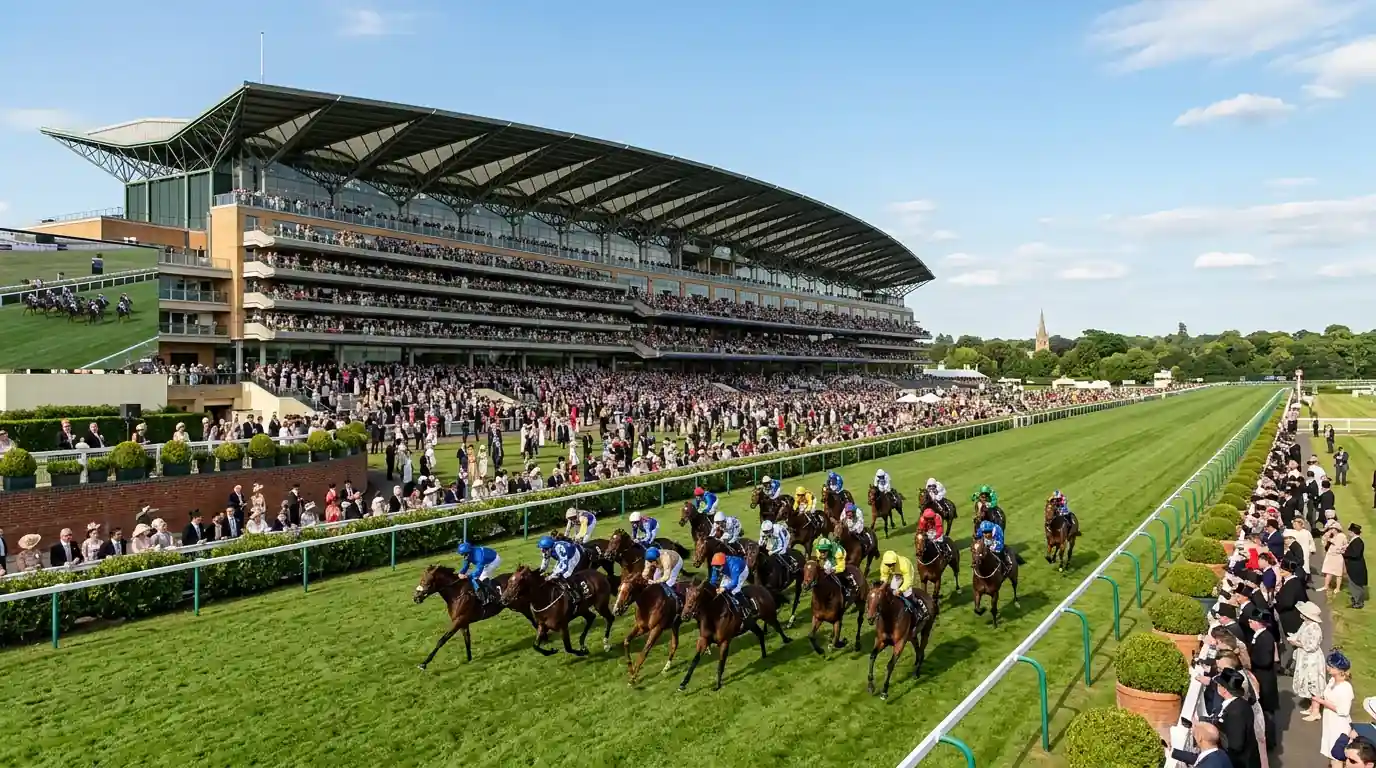
Table of Contents
- Five days where the Flat season peaks
- The five-day schedule and what each day signals
- Extra-places on the handicaps — the place-side maths that pays
- Top jockey and top trainer markets — liquidity without statistical edge
- Ante-post versus day-of-race — the timing decision
- Festival-day discipline at Royal Ascot
Five days where the Flat season peaks
I get up at half past five during Royal Ascot week. Not because the racing starts early — the first race is at 2.30 — but because by 6 am the morning prices are out and the Royal Hunt Cup market needs reading before the gallops reports filter through. Royal Ascot is the single most concentrated week of betting volume in the UK Flat calendar, with five million ITV viewers in 2025 and the Saturday audience up more than 20 per cent on the previous year. That viewership translates directly into market liquidity, sentiment money, and the kind of price volatility on handicaps that makes the week both an opportunity and a trap. For the broader picture of how Royal Ascot sits alongside the other UK festivals — particularly Cheltenham and Aintree — the Cheltenham and Grand National betting guide covers the jumps festival anchors that bookend the Royal Ascot summer window.
The peculiarity of Royal Ascot from a betting perspective is the contrast within the week. Three Group 1 races on each of the first four days draw the headline attention, but the handicap fields underneath are where the actual edges sit. Twenty-eight-runner fields in the Royal Hunt Cup, twenty-four in the Britannia, thirty in the Wokingham. The handicaps are where the bookmakers compete most aggressively on extra-places, and where the each-way maths shifts most decisively in the punter’s favour during the week. This piece walks through the five-day structure, the extra-places maths on the major handicaps, the cumulative jockey and trainer markets, and the ante-post versus day-of-race timing question that determines where most of the value is captured.
Check out our guide on Spread Betting Horse Racing UK — Spreadex, Make-Up and Risk as well.
The five-day schedule and what each day signals
Royal Ascot runs Tuesday to Saturday in the third week of June. Each day has a defined Group 1 highlight, a handicap headline, and a closing race that anchors the day’s betting volume.
Tuesday. The opening day. Headline races are the Queen Anne Stakes (Group 1, one mile, older milers), the Coventry Stakes (Group 2, two-year-old debut Group race), and the King’s Stand Stakes (Group 1, sprint, five furlongs). The Wolferton Stakes (Listed handicap, ten furlongs, older horses) is the headline handicap. Tuesday tends to be the day the markets find their feet — opening-day prices on subsequent races tighten as form lines from Tuesday clarify.
Wednesday. The Prince of Wales’s Stakes (Group 1, mile and a quarter) is the centrepiece — historically the second-best mile-and-a-quarter race of the UK Flat season. The Queen Mary Stakes (Group 2, two-year-old fillies sprint) and the Royal Hunt Cup (Class 2 mile handicap, 28-runner field, the headline handicap of the meeting) draw the heaviest punting volume.
Thursday. The Gold Cup at two and a half miles is the Royal Ascot Group 1 staying race and the signature event of the meeting. Around it sit the Ribblesdale Stakes (Group 2, fillies’ Classic trial distance) and the Britannia Handicap (24-runner three-year-old mile handicap, another major punting market).
Friday. The Commonwealth Cup (Group 1, six-furlong sprint for three-year-olds), the Coronation Stakes (Group 1, fillies’ mile, the Group 1 fillies’ equivalent of the Queen Anne), and the King Edward VII Stakes (Group 2, mile and a half, a Derby trial). The handicap headline is the Sandringham (three-year-old fillies mile handicap).
Saturday. The Diamond Jubilee Stakes (Group 1, sprint) and the Wokingham (Class 2 six-furlong handicap, often 30 runners) close the meeting. The Saturday TV audience is the largest of the week — partly because it is a weekend, partly because casual viewers tune in for the final-day spectacle. The handicaps on Saturday are particularly liquid as a consequence.
Extra-places on the handicaps — the place-side maths that pays
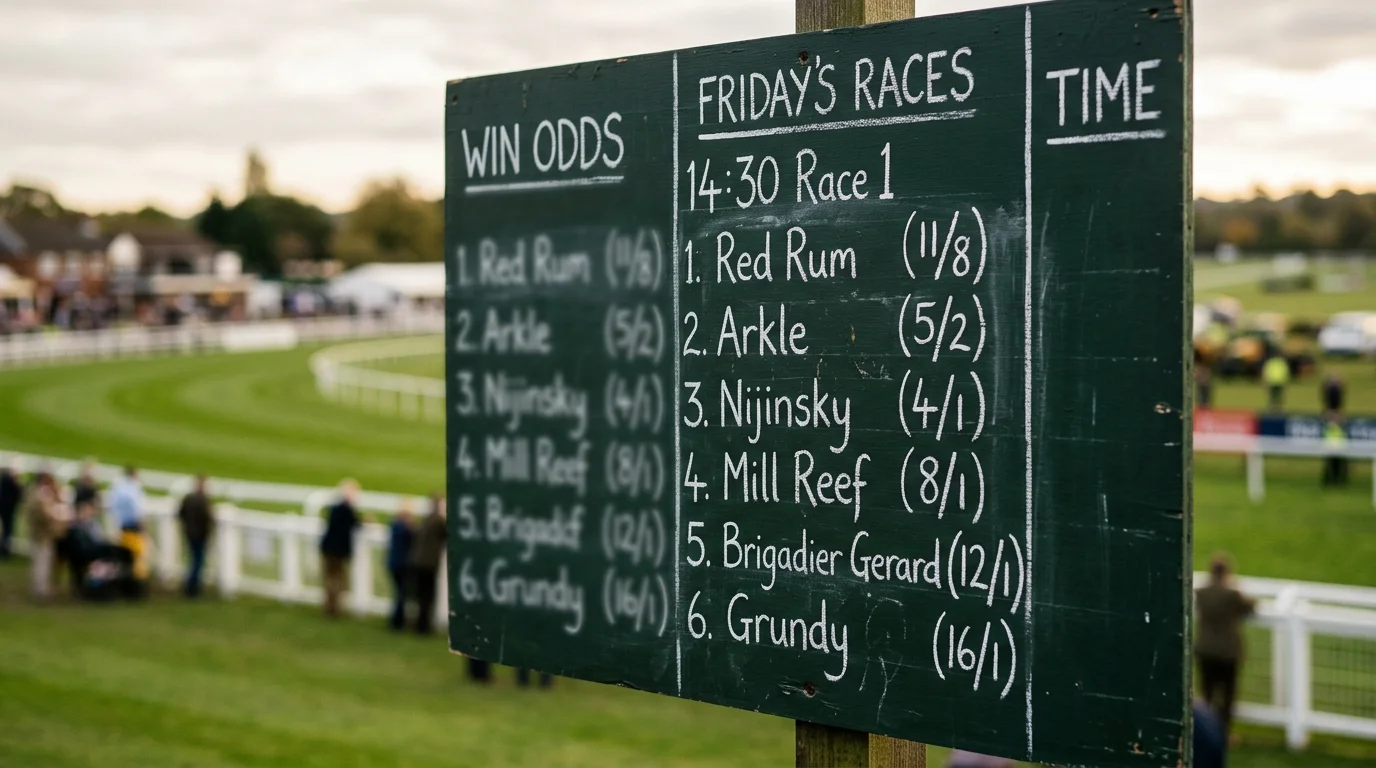
The single most important practical fact about Royal Ascot for the each-way punter is that bookmakers compete aggressively on extra-places for the headline handicaps. Standard place terms on a handicap with 16+ runners pay four places at 1/4 the odds. Royal Ascot operators routinely pay five, six and sometimes seven places at 1/4 the odds on the Royal Hunt Cup, Britannia, Wokingham, and the other major handicaps.
The mechanic. A six-place each-way bet at 1/4 the odds on a horse priced 20/1 effectively pays out at 5/1 for the place portion if the horse finishes in the top six. Compare the same bet at standard four-place terms — the win portion is identical, but the place portion only pays if the horse finishes top four. The two extra places represent real additional win-probability for a punter whose selection might run sixth in a 24-runner handicap.
The probability shift. In a 28-runner Royal Hunt Cup, the chance of finishing in the top six is mathematically about twice the chance of finishing in the top three. The extra two places shift the place-portion implied probability from roughly 11 per cent (top three) to 21 per cent (top six). A 20/1 horse with five percentage points of additional place probability is a meaningfully better each-way bet at six-place terms than at four-place terms, and the magnitude of the shift is what makes the major Royal Ascot handicaps the highest-EV each-way markets in the UK Flat calendar.
The calculation. Place terms at 1/4 of 20/1 is 5/1. Implied place-portion probability needed for breakeven on the place side: 1 / (5+1) = 16.7 per cent. If you believe the horse has a 21 per cent chance of placing in the top six, the place side has positive expected value of about 4-5 percentage points. The win portion at 20/1 needs only modest probability (around 5 per cent) for the total bet to be in profit. The extra-places terms can shift a marginally negative-EV each-way bet at standard place terms into a clearly positive-EV bet at six-place terms.
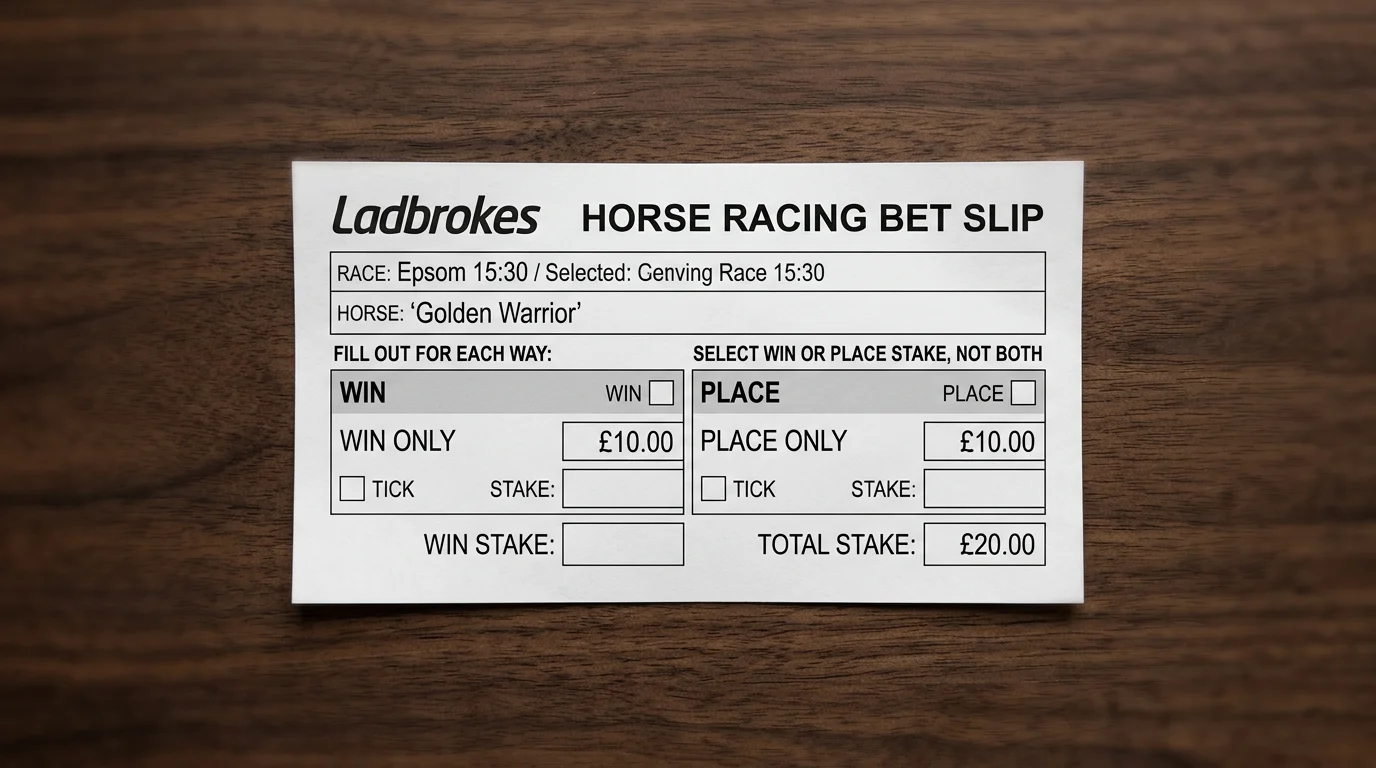
The catch — extra-places are not uniform across operators. One operator’s seven places on the Royal Hunt Cup might be another’s four. The terms are published on each operator’s promotion page in the days before the race, and the better terms are usually flagged on the betslip. Reading the slip is the entire game. The total betting turnover on UK racing fell by 9 per cent in Q1 2025, and operators have used Royal Ascot extra-places as a key acquisition lever to recover share — the place-terms competition has intensified in the past two seasons specifically because of the turnover pressure.
Discover everything about best betting horse racing here.
Top jockey and top trainer markets — liquidity without statistical edge
The week-long cumulative markets — Top Jockey and Top Trainer at Royal Ascot — generate substantial liquidity but tend to be priced efficiently because the sample sizes are small enough that the prices reflect the obvious favourites rather than meaningful probabilistic differentials.
The Top Jockey market. Around 30 races over five days, with the major jockeys riding perhaps 20-25 of them each. The headline jockeys (the top retainers for the major yards) tend to dominate the front of the betting. The market pricing reflects the obvious — riders riding for the strongest yards at the meeting are short prices. The catch is that 30 rides is a small sample. A jockey with a strong book of horses can still ride one winner across the whole week if the prices go against them, and a jockey with a weaker book can ride three winners on the right day. The market does not price this variance well — the favourites are priced as if the obvious outcome is locked in, when in practice the sample is too small for the obvious outcome to be assured.
Top Trainer is similar. The dominant stables — those with 20-30 runners across the meeting — are short prices because their volume guarantees they will be in contention. Genuine value is occasionally available on second-tier stables with a strong specific book of horses for the week, but the market identifies these candidates quickly and the prices tighten. The 5.031m racecourse attendance figure across UK racing in 2025 — first year above five million since 2019 — is concentrated heavily on Royal Ascot, and the visibility drives more efficient pricing on the cumulative markets than on equivalent markets at less-watched festivals.
The practical implication. Top Jockey and Top Trainer markets are liquid and accessible but rarely offer the kind of price edge that justifies the bet purely on probability grounds. They are bets people make for the narrative interest of having a horse running across the week rather than because the EV maths is strong. The cleaner edges sit on the individual handicap each-way bets with extra-places, not on the cumulative markets.
Ante-post versus day-of-race — the timing decision
The timing decision for Royal Ascot bets follows the same pattern as ante-post betting at Cheltenham, but the windows are shorter because the field declarations come closer to the race.
Ante-post window. Four to six weeks out, the prices on Royal Ascot favourites are typically meaningfully longer than they will be on the day. A clear Gold Cup ante-post favourite at 5/2 in mid-May might be 6/4 on the morning of Thursday at Royal Ascot. The ante-post bet at 5/2 has captured value if the horse runs — but the non-runner risk over six weeks is real, perhaps one in five horses pulled or rerouted in this window.
NRNB cover. Most operators offer Non-Runner No Bet on Royal Ascot from the racing week itself, sometimes from the Monday or Tuesday before. The NRNB window is shorter than for Cheltenham (typically the week, rather than two weeks plus). Below the NRNB window, ante-post bets carry full non-runner risk.
Day-of-race timing. The morning of the race is when most of the substantial money comes in. Prices tighten through the morning as gallops reports filter through, jockey bookings confirm, and stable-side opinion is reflected in betting moves. By mid-morning the prices are reasonably efficient — by the early afternoon the prices have crystallised. The Big Punting Survey work suggests the most profitable Royal Ascot punters take their main positions either four-plus weeks ante-post (capturing value at the cost of NR risk) or in the last 60 minutes before each race (taking accurate prices but with no ante-post discount).
The hybrid approach. Take ante-post positions on horses with low non-runner risk (proven Royal Ascot performers, horses with a clear path through trials, established stable plans) four to six weeks out. Take day-of-race positions on the handicaps where the field declarations and extra-places terms determine the value. Two different mental modes for two different bet types, captured by the same week of racing.
Festival-day discipline at Royal Ascot
The clean approach across the five days. Read the slip on every each-way bet for extra-places. Treat the handicap markets — Royal Hunt Cup, Britannia, Sandringham, Wokingham — as the value engine of the week and the Group races as the watching-with-attention markets where the prices are usually right. Take ante-post on Group race favourites where the path is clear, day-of-race on handicaps where the field shapes the value. Avoid the cumulative jockey and trainer markets unless you have a specific view on a second-tier candidate that the market has not caught up with. Watch the radio commentary if you trade in-running. Five days is a long meeting and discipline through Tuesday’s openers matters as much as discipline on Saturday’s closing Diamond Jubilee. Sleep at proper hours. The morning prices wait.
Why does Royal Ascot have so many handicaps with 20+ runners?
The handicap races at Royal Ascot are designed for full fields to maximise competition and prize money. The Royal Hunt Cup, Britannia, Sandringham and Wokingham each carry significant prize funds (£100,000+) and the entry conditions are calibrated to attract maximum entries from the broader Flat training population. The handicapper’s job is to make every horse a credible chance — and at major festivals the entries push the safety limits at most courses.
Do all bookmakers pay 6 places on the Royal Hunt Cup?
No. Place-terms competition varies operator-by-operator and from year to year. In recent seasons most major operators have paid at least five places, with the more aggressive operators paying six or seven. The terms are published on each operator’s promotions page in the days before the race and shown on the betslip at confirmation. Read the slip each time — extra-places terms are not standardised and one operator’s seven is another operator’s four.
Written by the editors at Best Betting Horse Racing.