Each-Way Betting Rules UK — Place Terms, Dead Heats and Rule 4
 Available in US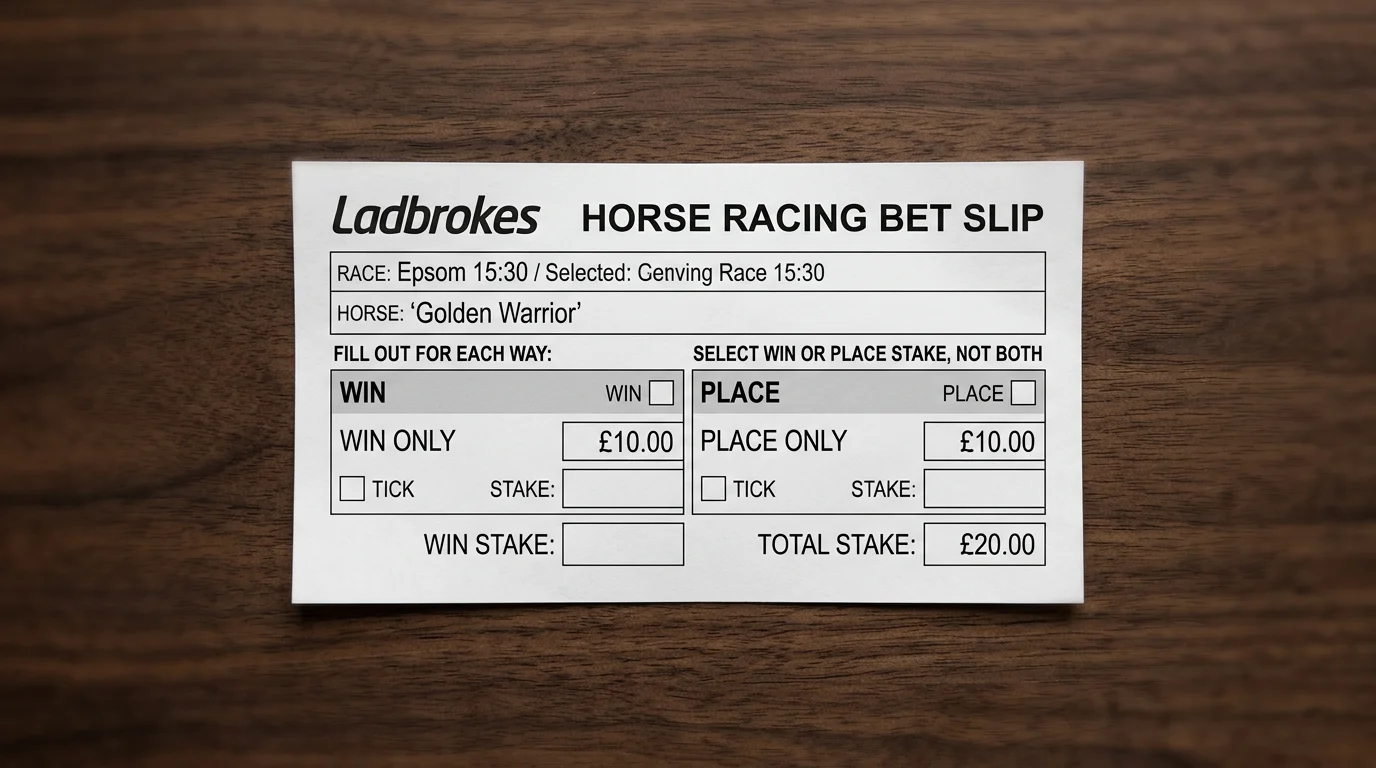
Table of Contents
- The half-bet most punters still get wrong
- Standard place terms before you go anywhere near a slip
- Dead heats and why two horses sharing the line halves your stake
- Rule 4 — the late withdrawal that taxes everyone left in the race
- The breakeven price your each-way bet actually needs
- The each-way checklist before you confirm a slip
The half-bet most punters still get wrong
The first each-way bet I ever lost properly cost me because I assumed the place portion paid on the top three. It paid on the top four — at quarter the odds, in a handicap with eighteen runners — and I would have collected if I had bothered to read the place terms on the slip before clicking confirm. Nine years later I still see seasoned punters making the same mistake, only with bigger stakes.
An each-way bet is two bets in one. Half your stake goes on the win, half goes on the place. If your horse wins, both halves pay. If it finishes in a qualifying place but does not win, only the place portion pays — at a fraction of the win odds, usually a quarter or a fifth. The mechanics sound simple. The problem is that “place” is defined by a set of rules that change by race type, runner count and whether the race is a handicap. Promotional extra-places muddy things further, and then Rule 4 deductions and dead-heat divisions can carve into your return even when your horse finishes where you expected.
This guide walks through the standard UK place terms, the maths of dead heats, the Tattersalls Rule 4 deduction table, and a quick breakeven calculation so you can tell when an each-way bet has a sensible edge and when you are just paying tax on a longshot.
Read our detailed review of Epsom Derby Betting UK — Classic Distance, Camber and Trial Form.
Standard place terms before you go anywhere near a slip
The single most useful page in racing for an each-way bettor is the back of the old Timeform pocketbook, where the standard place terms are printed in a grid that has barely changed in twenty years. The structure is dictated by race type and field size. Most UK bookmakers apply the same baseline — variations sit on top of that baseline as promotions, not as policy.
For non-handicap races, the place terms are usually:
- 2 to 4 runners: win only, no place portion accepted
- 5 to 7 runners: 2 places at 1/4 the odds
- 8 or more runners: 3 places at 1/5 the odds
For handicap races, the structure is more generous on field size:
- 2 to 4 runners: win only
- 5 to 7 runners: 2 places at 1/4
- 8 to 11 runners: 3 places at 1/5
- 12 to 15 runners: 3 places at 1/4
- 16 or more runners: 4 places at 1/4
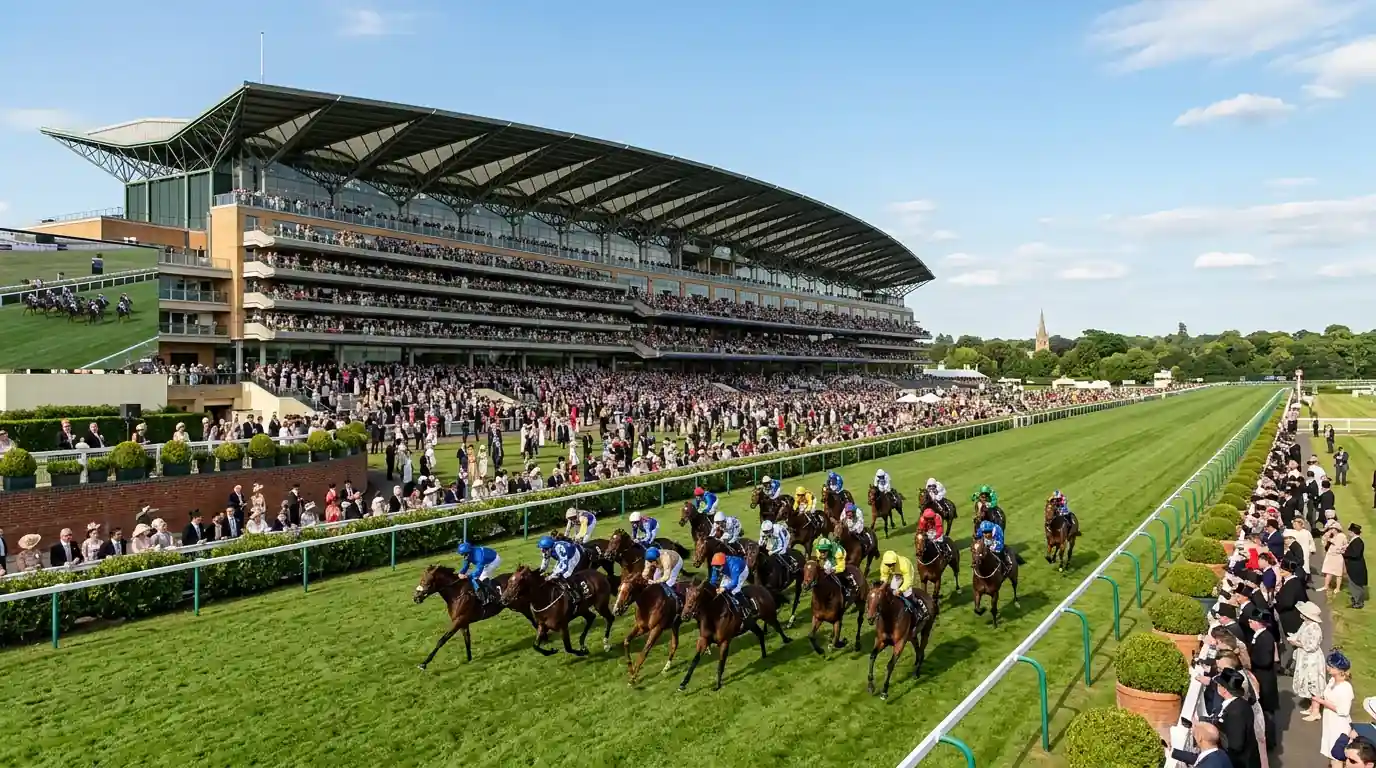
Festivals change the maths because promotional extra-places stack on top of standard terms. At Royal Ascot, Cheltenham and the Grand National meeting, you will routinely see operators paying five, six and even seven places on the headline handicaps, often still at quarter the odds. Five million viewers watched Royal Ascot on ITV last year, with the Saturday audience up more than twenty per cent, and that visibility is exactly why bookmakers compete on place terms during festival weeks. Read the slip every time — promotional terms are not standardised and one operator’s seven places on the Royal Hunt Cup is another’s four. The race conditions, runner count and Rule 4 status of any late non-runners all matter before you confirm. For a fuller view of how each-way fits alongside other formats, the UK horse racing bet types guide walks through win, multiples, forecast and tricast in detail.
Dead heats and why two horses sharing the line halves your stake
The first dead heat I had to explain to a friend was a three-way photo at Sandown. Three horses split second, his each-way bet on one of them came back at a third of what he expected, and he was halfway through writing a complaint email before I talked him down. Dead heats are settled by stake division, not by reducing the odds, and the formula is older than I am.
When two or more horses cannot be separated for any paid position, the rule is simple. Your stake on that position is divided by the number of horses involved in the dead heat, and the divided stake is paid at the full odds. The other half of your stake on that position is lost.
Worked example. You back a horse each-way at 10/1 for a £10 each-way bet — £10 on the win, £10 on the place, £20 total. The place terms are 1/4 the odds, three places. Your horse dead-heats for third with one other runner. Place portion settled: stake £10 becomes £5 (divided by 2), paid at 1/4 of 10/1, which is 2.5/1. Return on the place: £5 × 2.5 + £5 = £17.50. The other £5 of the place stake is lost. The win portion is also lost because the horse did not win outright. Your total return on the £20 outlay is £17.50 — a small loss despite finishing in the frame.
Dead heats are not common at the top of handicaps, but they are common enough at the place terms boundary — fourth, fifth, sixth in a Royal Ascot handicap — that any serious each-way bettor should factor them in mentally. They effectively shave a few percent off the value of place terms across a season.
Find the best options for best betting horse racing.
Rule 4 — the late withdrawal that taxes everyone left in the race
Late non-runners drive me round the bend, and not just because they cost me a winner. Rule 4 deductions, named after the Tattersalls rule that codified them in the early twentieth century, reduce the payout on every other selection in the race when a horse is withdrawn after the market opens — and many punters do not realise the deduction applies to their each-way place return as well as the win.
The Tattersalls Rule 4 table is the same across UK bookmakers and applies pence-in-the-pound to your winnings (not your stake). The deduction depends on the odds of the withdrawn horse at the time of withdrawal.
The headline tiers:
- Withdrawn at 1/9 or shorter: 90p in the pound deduction
- 2/11 to 2/17: 85p
- 1/4 to 1/5: 80p
- 3/10 to 2/7: 75p
- 2/5 to 1/3: 70p
- 8/15 to 4/9: 65p
- 8/13 to 4/7: 60p
- 4/5 to 4/6: 55p
- 20/21 to 5/6: 50p
- Evens to 6/5: 45p
- 5/4 to 6/4: 40p
- 13/8 to 7/4: 35p
- 15/8 to 9/4: 30p
- 5/2 to 3/1: 25p
- 10/3 to 4/1: 20p
- 9/2 to 11/2: 15p
- 6/1 to 9/1: 10p
- 10/1 to 14/1: 5p
- Longer than 14/1: no deduction
Worked case. You back a horse each-way at 5/2 in a non-handicap with eight runners (three places, 1/5 odds). Shortly before the off, the 5/1 second favourite is withdrawn. Rule 4 of 15p in the pound applies. Your horse wins. Win portion: £10 × 2.5 = £25 winnings, less 15p × £25 = £3.75 deduction, returning £21.25 plus £10 stake. Place portion: £10 × (2.5/5) = £5 winnings (at 1/2 of 5/2), less 15p × £5 = £0.75 deduction, returning £4.25 plus £10 stake. Total return on £20 outlay: £45.50. Without the deduction it would have been £50 flat. Multiple non-runners stack, but the total deduction is capped at 90p in the pound.
The breakeven price your each-way bet actually needs
Before I place an each-way bet, I run a quick breakeven check. Not because the maths is hard — it is not — but because most each-way bets fail this test and would be cheaper as straight win-singles or skipped entirely.
The principle: an each-way bet only delivers positive expected value when the win-portion price and the place-portion price together exceed the true probability of those two outcomes. At a fraction of 1/5 the odds, the place portion needs the win odds to be long enough that one fifth still pays meaningfully. At 1/4, the threshold is lower.
A practical rule of thumb across UK racing: each-way bets are usually only worth placing on horses priced 6/1 or longer, in handicaps of 12 or more runners, when extra-places are on offer. Below 6/1, the place portion almost always undercuts the implied probability of placing, because the bookmaker overround eats the margin. Above 6/1, in a 16-runner handicap paying four places at 1/4, the place portion can offer genuine value — especially when extra-places push the eligible field to five or six.
The quick check. At 8/1 in a 16-runner handicap paying four places at 1/4, the place portion is effectively 2/1. The implied probability is 33.3 per cent. If you believe the horse has a better than one-in-three chance of finishing in the top four — a reasonable claim for any of the first six in the betting — the each-way bet has place-side value before you even consider the win. The win portion is gravy.
Below 4/1, each-way bets almost always lose value because the win portion is short and the place portion at 1/5 of short odds is barely above evens. In those races, back the win or stay out.
The each-way checklist before you confirm a slip
Before you click confirm on any each-way bet, the same three questions save you money. Is the race a handicap, and how many runners are declared right now (not at the morning preview)? Are the place terms standard or has the operator added extra-places that change the fraction? Is the horse priced long enough that the place portion at the advertised fraction still covers the implied probability of placing?
Get into the habit of running those three checks in under a minute. The Big Punting Survey work that Racing Post publishes each year shows the gap between profitable each-way bettors and the rest is almost entirely about discipline at the slip, not about picking better horses. Eighty per cent of Cheltenham Festival bets in 2024 went through mobile apps, and the mobile slip is precisely where the place terms are easiest to miss because the text is small and the confirm button is large. The bookmaker has no obligation to flag a place-term change to you. The slip itself is the contract.
Are place terms standard across all UK bookmakers?
The baseline structure — places by runner count and handicap status — is consistent across UKGC-licensed operators because it follows the Tattersalls framework. What varies is promotional extra-places, particularly at festivals. One operator might pay six places on a Royal Ascot handicap while another pays four. Always read the slip rather than assume the place terms match the last operator you used.
How does Rule 4 affect an each-way bet specifically?
The Rule 4 deduction applies to both the win and place portions of an each-way bet. The deduction is taken as pence in the pound from your winnings, not your stake. If a 5/1 horse is withdrawn after the market opens, a 15p deduction applies to both the win and place returns on every remaining bet in that race.
What happens to my each-way bet if my horse is a non-runner?
If your selection is withdrawn before the race, the full each-way stake is refunded. The bet simply does not stand. There is no Rule 4 applied to your own non-running horse because the deduction is paid by remaining runners, not the withdrawn one.
Written by the editors at Best Betting Horse Racing.