Epsom Derby Betting UK — Classic Distance, Camber and Trial Form
 Available in US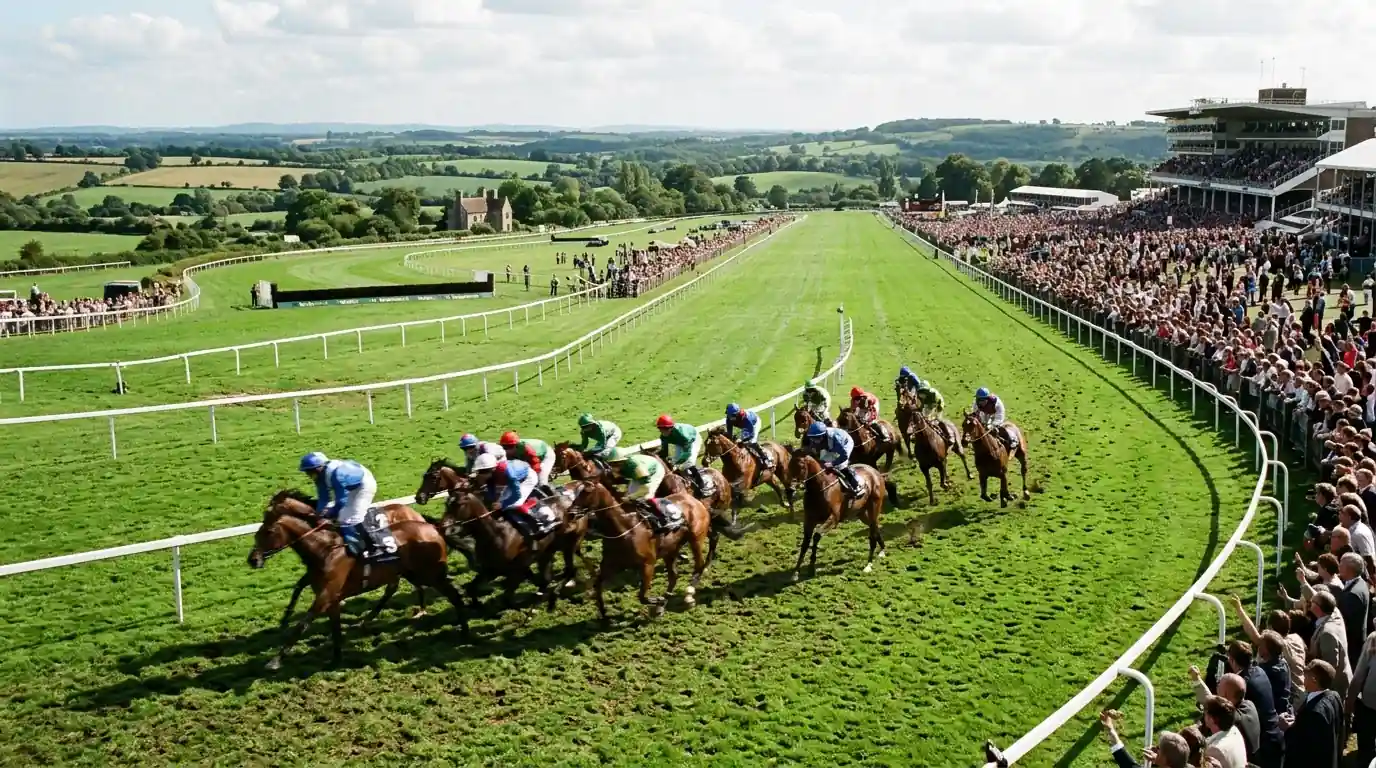
The Classic that punishes textbook horses
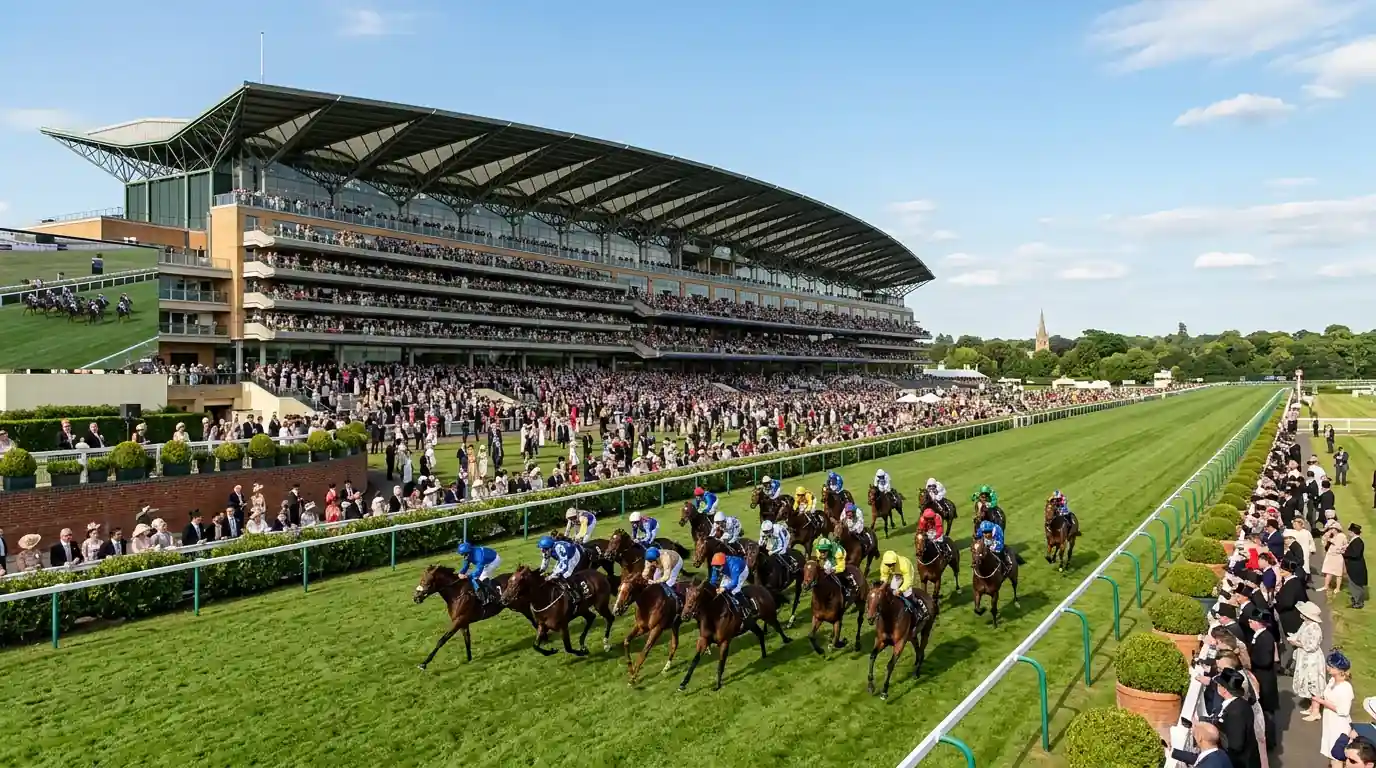
The Epsom Derby is the only Classic where the course is its own analytical category. Newmarket’s Rowley Mile is fair and straight. Doncaster’s Town Moor is fair and galloping. Epsom is camber, downhill descent, sharp left-handed turn and uphill finish, all packed into a mile and a half. A horse can be the right horse for the Derby in every textbook sense — bred for the distance, in form, ridden by the right jockey — and still struggle around Epsom because it has never run on undulating ground before. Twelve months of trial form can be undone in three minutes of racing.
The Derby is the centrepiece of the UK Flat Classic series and runs on the first Saturday of June at Epsom Downs. Across UK racing’s 1,423 high-rated Flat horses (90+ performance figure) in 2025, only a fraction are bred and trained for the Derby distance — a mile and a half is a long way for a three-year-old that has typically raced over a mile or less as a juvenile. The Derby tests stamina, balance, jockeyship and temperament simultaneously, and the form lines from the trial races are the punter’s main read on which horses can handle the test.
This piece walks through the course specifics that make Epsom unique, the trial races that feed Derby form, the pace and draw considerations, and the each-way strategies that work on the small Derby field.
You may also find Flat vs National Hunt Racing UK — Betting Differences That Matter interesting.
The course — what Epsom actually demands
The Derby course at Epsom is a left-handed mile-and-a-half horseshoe with two features that drive most of the race-shape outcomes: the camber and the descent at Tattenham Corner.
The camber. The track runs across a hill rather than around a flat infield. From the moment the field leaves the stalls, the horses are running on a surface that slopes laterally — the inside of the track is lower than the outside. The camber forces horses to balance themselves against the slope, and horses with poor balance or inexperience on undulating ground struggle to settle into a rhythm. The camber effect is most pronounced in the first six furlongs before the field reaches the descent.
The descent to Tattenham Corner. Approximately three furlongs from the finish, the track turns sharply left and drops significantly in elevation. Horses that have been travelling on the camber for the previous mile suddenly have to handle a downhill stretch into a tight left turn. The combination of the descent and the turn pulls horses out of position if they have not learned to ride the camber, and the jockey’s job is to keep the horse balanced through the turn rather than letting it freewheel down the hill and lose ground around the bend.
The uphill finish. From the foot of the descent, the track climbs into the final furlong. A horse that has galloped freely down the hill arrives at the foot of the rise with depleted resources for the climb. Horses that have been ridden patiently through the descent have more in reserve for the final furlong. The classic Derby winning pattern is the horse that switches off through the early part of the race, handles the descent in mid-division, and stays on strongly up the rise to the line.
The implication for form. A horse with one piece of solid form over a mile and a quarter at a galloping track (Newmarket, York) might be a top-class miler-and-a-quarter without being a Derby horse. The Derby test specifically requires balance over undulations, which is not tested by the textbook trial races at flat tracks. The horses that handle Epsom are usually the ones with at least one trial at an undulating course — Goodwood, Lingfield, Chester — where the camber and turns have been part of their education. The form-reading shorthand from the racecard helps decode the trial pattern: the Flat versus National Hunt racing UK guide covers the Flat code structure these horses sit inside.
Trial form — which races actually predict the Derby
The Derby trial schedule runs from late April through the third week of May, with a handful of key races acting as the most reliable form lines into Epsom.
Dante Stakes (York, mid-May). The single most predictive trial in the modern Derby era. Run over a mile and two and a half furlongs at the galloping York track, the Dante is a Group 2 race that has produced multiple Derby winners and many placed Derby horses. The combination of distance (similar to the Derby), grade (Group level), and timing (about two and a half weeks before Epsom) makes the Dante a clean read on the horses’ Derby chance. The catch is that the York track is fair and galloping, so the Dante winner may not handle Epsom. Cross-reference with course-specific form is essential.
Chester Vase (Chester, early May). Run at the tight, undulating Chester course over a mile and four and a half furlongs. The course test is closer to Epsom than the Dante, because Chester is tight and turning, but the field quality is typically a step below the Dante. Chester Vase winners that go on to win the Derby tend to be the horses that have handled the course test convincingly rather than just outclassing modest trial fields.
Lingfield Derby Trial (Lingfield, late April or early May). Run at a left-handed track with similarities to Epsom in shape (turning, undulating). The trial is run over a mile and three and a half furlongs and the field quality is typically modest. The course-shape similarity to Epsom is the main reason for the trial’s relevance, but the field quality limits how much form weight to put on the winner.
French and Irish trials. The Prix du Jockey Club (Chantilly, early June) is the French Derby and runs on the same weekend as Epsom — French trial form (Prix Greffulhe, Prix Hocquart) feeds the French Derby rather than the Epsom one. The Derrinstown Stud Derby Trial (Leopardstown, mid-May) is the Irish equivalent and feeds Epsom directly. Irish trial form has produced multiple Epsom Derby winners in the past two decades, particularly from the Aidan O’Brien stable.
Cross-trial form. The strongest Derby cases are horses that have shown form across multiple trials — winning or placing at the Dante and either Chester Vase or Lingfield, for example. Single-trial form leaves the question of whether the horse can replicate the level of performance over Derby conditions. Multi-trial form provides triangulation.
Learn more about best betting horse racing on our main page.
Pace and draw — the small-field tactical question
The Derby is typically run with a field of 12 to 18 runners — small by handicap standards but large by Group-race standards. The pace scenario and draw both matter in ways that they do not at galloping courses with smaller fields.
The draw. Stalls are numbered 1 (innermost) to the number of runners. At galloping courses, the draw is a marginal factor. At Epsom, the draw matters more because the track turns left almost immediately and the inside has the shortest path around. Low draws (stalls 1 to 5) have a structural advantage in getting into a forward position before the camber starts to affect balance. High draws (stalls 14+) tend to find themselves wide of the field through the early stages and can give away ground around the turn. The advantage is not decisive — Derby winners have come from high draws — but the pricing impact is real and the morning markets often shift in response to the official draw confirmation on the morning of the race.
Pace scenario. The Derby pace varies year to year depending on the field. A field with multiple front-runners produces a fast early pace, which favours hold-up horses with stamina. A field with no obvious front-runner produces a pedestrian early pace, which favours horses with tactical speed who can be ridden close to the leaders. The pace scenario is one of the most important variables to assess in the days before the race, and it is also one of the hardest to predict because the riding instructions are often kept private until the race itself.
Combining draw and pace. A horse drawn low in a fast-pace scenario has the optimal position for a hold-up ride — sit handy, save the run for the descent, attack in the final furlong. A horse drawn wide in a slow-pace scenario faces the difficult task of either using early energy to take a forward position or settling at the back and asking for a turn of foot from too far back. The combinations are not deterministic but they do shift the prices, and the day-of-race markets reflect the draw and pace expectations.
Each-way maths on the Derby field
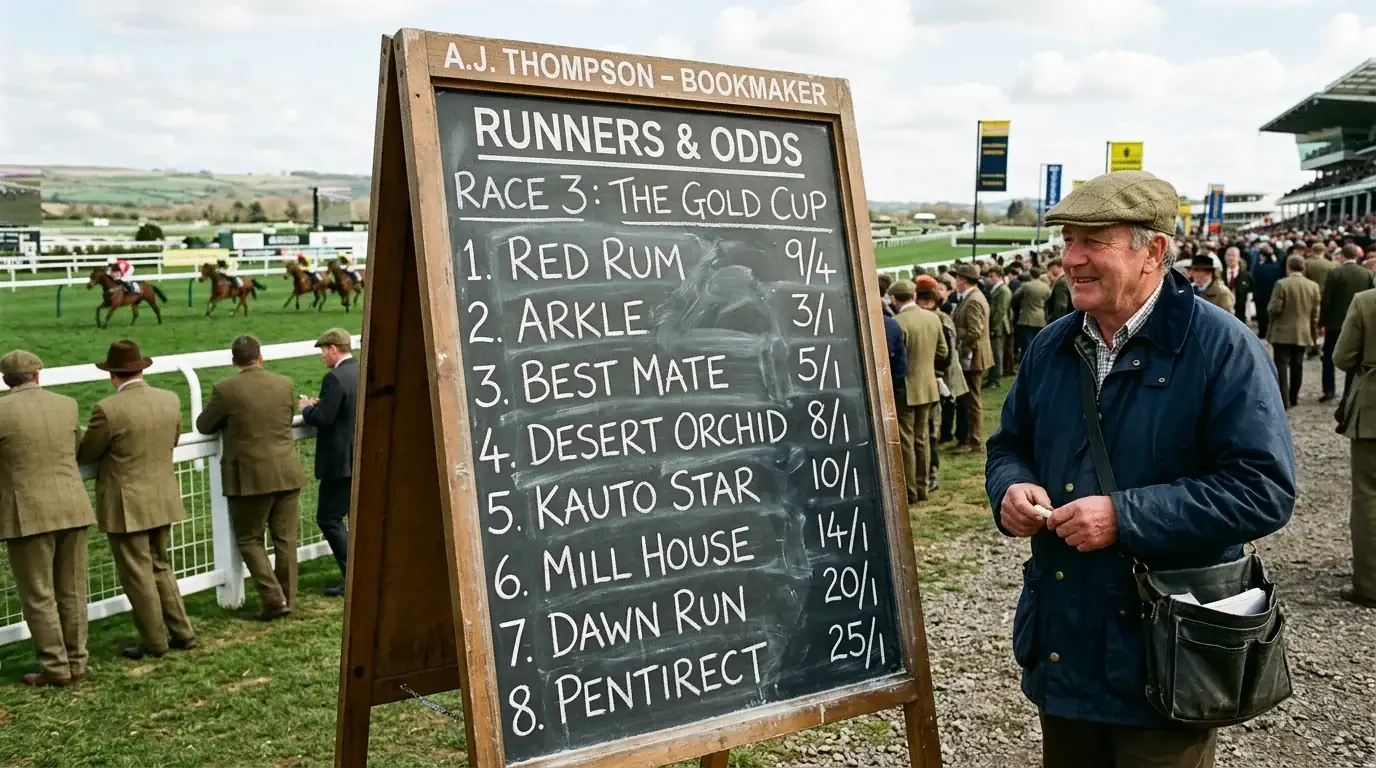
The Derby is a non-handicap race with a field typically of 12-16 runners. Standard place terms apply: three places at 1/5 the odds. Operators occasionally extend to four places at 1/5 for the Derby specifically, but the extension is less generous than on the major handicaps.
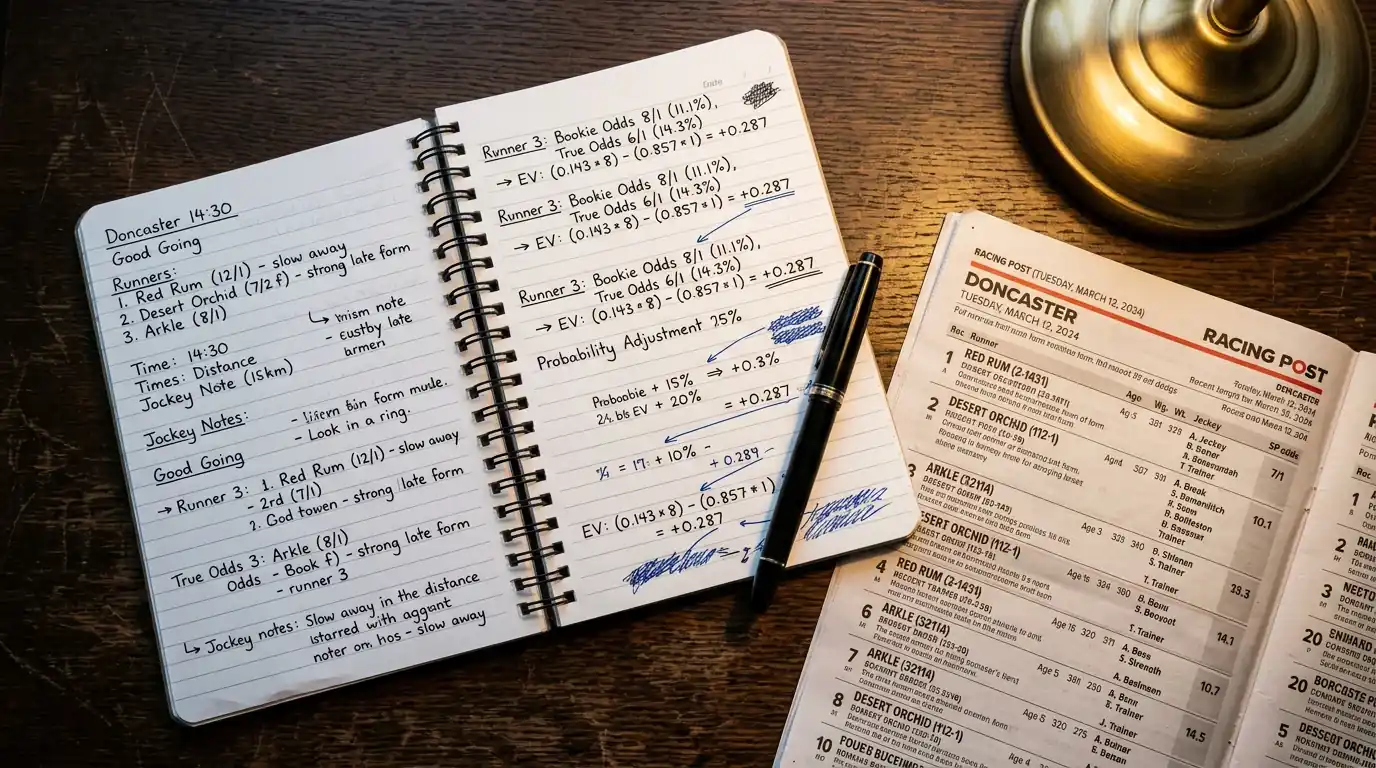
When each-way works on the Derby. A horse priced at 16/1 or longer with a credible claim of being in the first three. The place-portion implied probability at 1/5 of 16/1 (effectively 3.2/1) is 23.8 per cent. If you believe the horse has a 25-30 per cent chance of placing in the top three, the place side has positive expected value. The win portion at 16/1 only needs 5-6 per cent probability for the bet to be in profit overall.
When win-only works better. On shorter-priced selections — 6/1 or less — the place portion at 1/5 of short odds barely covers breakeven, and the bet is effectively a win-only bet with a small place insurance. In those cases, doubling the win stake (forgoing the place insurance) is usually better expected value because the win odds are doing all the work.
Field shape matters. A 12-runner Derby field has fewer place opportunities than an 18-runner Derby field, simply because there are fewer runners to fill the three places. The bigger the field, the more place-portion expected value the each-way bet captures. Punters who back outsiders each-way in 18-runner Derbies are working with materially better place-side maths than punters who back the same horses in 12-runner Derbies.
The corollary. Outsider each-way Derby bets in big fields are one of the structurally best EW positions in the UK Classic season. The horses priced 25/1 to 50/1 in a 16-runner Derby field that have shown one credible piece of trial form often offer place-side value that the place-portion calculation justifies.
A Derby preview frame that holds up year-to-year
The clean approach. Read the trial form across the Dante, Chester Vase and Lingfield first — the multi-trial cases are usually the strongest. Cross-reference each horse’s course experience for evidence of handling undulations. Check the draw on the morning of the race and integrate with the expected pace scenario based on the field’s running styles. For each-way bets, focus on the outsider end of the market in larger fields where the place-portion maths is favourable. Treat the favourite’s price with caution if the favourite’s form is built on single-trial evidence at a galloping course — Epsom is its own test and the trial form does not transfer cleanly. The Derby rewards horses that handle the course and the test, not necessarily the best horse on the figures. Five million racegoers attended UK racing in 2025 — the first year above that level since 2019 — and the Derby crowd is among the most engaged in the calendar. The market on the morning is well-informed and the prices generally accurate. The edges are in the trial form reading, the course test assessment, and the place-side maths on the outsiders.
How predictive is the Dante Stakes for the Epsom Derby?
The Dante is the single most predictive trial in the modern era — multiple Derby winners and many more placed runners have come from the race. The combination of distance, grade and timing makes it a clean read. The caveat is that York is a fair galloping track while Epsom is camber and undulations, so a Dante winner that has never raced on undulating ground may not handle the course test. The strongest Derby cases are horses with strong Dante form and at least one piece of undulating-course experience.
Does the Epsom camber favour any particular running style?
Hold-up horses with proven balance under pressure tend to handle the Epsom test better than front-runners that have never raced on undulating ground. The descent to Tattenham Corner is the critical phase — horses ridden patiently through the early camber phase, allowing them to settle into the rhythm of the slope, are typically the ones with most resources left for the uphill finish. The textbook Derby winner sits in mid-division through the descent, picks up around the turn, and stays on strongly up the rise to the line.
Prepared by the Best Betting Horse Racing editorial staff.