
Tote Betting UK — Pools, Placepot and Jackpot Mechanics
 Available in US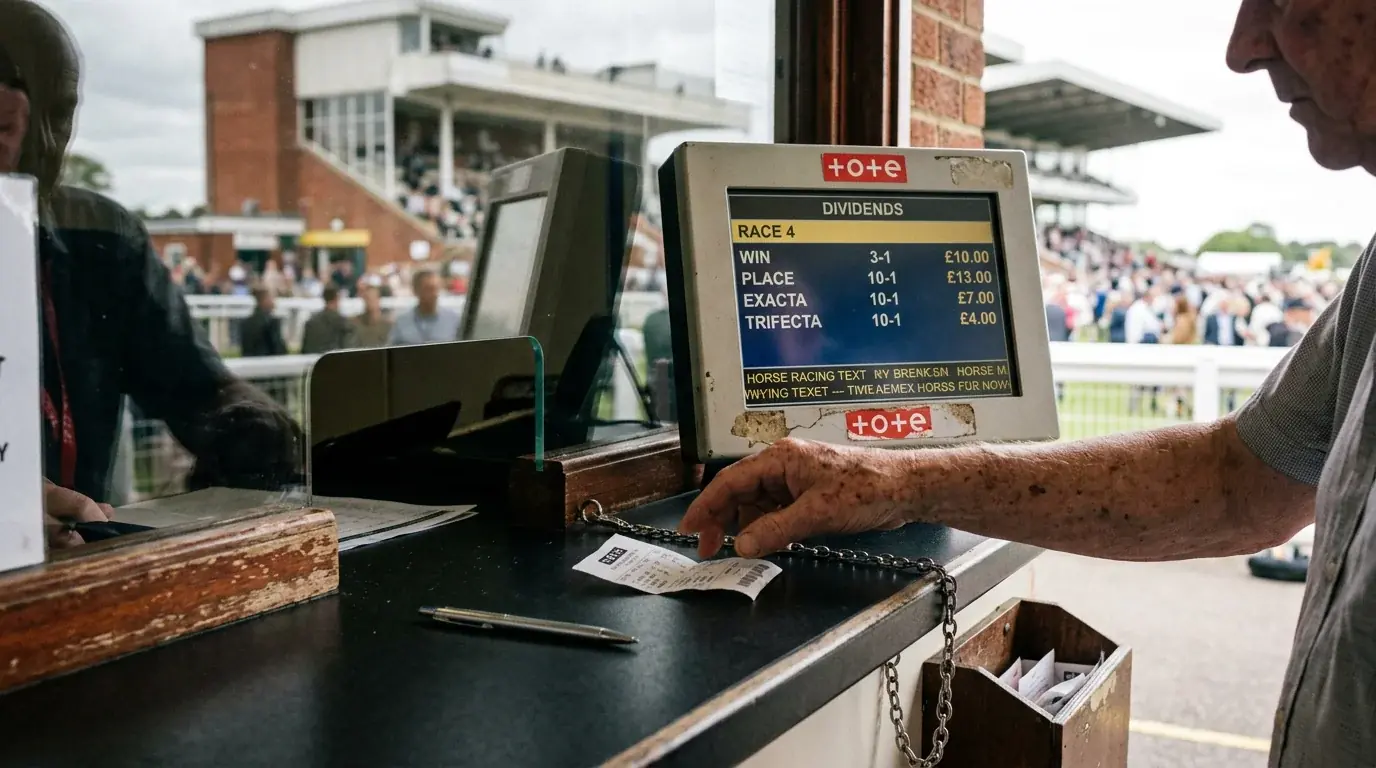
The pool product that does not get a fair hearing
An older punter I used to see regularly at Lingfield in the late 2000s ran most of his action through the Tote rather than the on-course bookmakers. I asked him once why. His answer was that the Tote routinely paid more than the starting price on the longer-priced horses he liked to back, and that the £2 Placepot was the cheapest entertainment in racing if you treated it as a multi-race puzzle rather than a serious win bet. I have thought about that conversation a lot in the years since. The Tote is an underrated product in UK racing — a separate pool-betting mechanism that operates on different mathematics from fixed-odds, and one that can genuinely beat the starting price in specific market conditions while offering some of the most distinctive betting products in the calendar.
UK racing’s gross gaming yield of £766.7m in the year to March 2025 (Gambling Commission figures) is dominated by fixed-odds sportsbook and exchange activity, with Tote pool betting representing a smaller but structurally separate share. The Tote runs as a pari-mutuel operator under specific commercial arrangements with UK racecourses, and its products — win and place pools, Placepot, Jackpot and others — work in ways that most casual punters never bother to understand. This guide walks through pool mechanics, the Placepot, the Jackpot, and the specific situations where Tote dividends beat fixed-odds prices.
You may also find UK Budget 2025 Betting Impact — Tax Changes for Racing Punters interesting.
How pool betting actually works
Pool betting is mathematically different from fixed-odds in a way that matters more than most punters realise. The Tote does not set prices. The Tote takes bets into a pool, takes its operating margin out of the pool, and divides the remainder among winning tickets in proportion to their stakes. The dividend is what is left after the take-out, divided across the winning bets — and it is only calculable after the betting closes.
The mechanic. A win pool on a single race might collect £20,000 in total bets across all runners. The Tote operating margin (the take-out) is typically 19.5 per cent on win pools, which removes around £3,900 from the total, leaving about £16,100 for distribution. If £4,000 of the total was bet on the winner, the winning pool divides £16,100 across that £4,000 of winning stake — a dividend of approximately 4/1 effectively, expressed as a £4.025 return per £1 stake.
The fixed-odds comparison. The same horse might have been priced at 3/1 in the on-course fixed-odds market. The Tote dividend at 4/1 beats fixed-odds by a meaningful margin in this hypothetical case. But the Tote dividend on a different horse in the same race might be substantially less than fixed-odds — particularly if the horse was a heavily backed favourite where the pool concentration on that horse is high. The pari-mutuel mathematics means the dividend reflects how the pool was distributed across runners, not where the bookmaker thought the prices should be.
The take-out variation. Tote win pools typically operate at around 19.5 per cent take-out. Place pools run higher, around 24 per cent. Exotic pools (forecast, tricast, Placepot) run higher still, often 25-27 per cent. The take-out is the structural cost the Tote builds into the pool to fund its operations, and it is one of the reasons the Tote dividends are not consistently better than fixed-odds — the take-out is the equivalent of the bookmaker’s overround but applied as a flat percentage rather than as a price-by-price adjustment.
The implication. The Tote dividend is unpredictable from the punter’s perspective. You do not know what dividend you are getting at the time you place the bet — only after the betting closes and the pool distribution is calculated. The unpredictability is the central feature of pool betting that distinguishes it from fixed-odds.
Placepot mechanics — six races, six placers
The Placepot is the Tote’s flagship multi-race product, and it is the single most distinctive bet type in UK racing. The structure is simple to understand but the mathematics is genuinely interesting.
The format. The Placepot requires you to pick a horse that places in each of the first six races on a defined card. “Places” follows the standard each-way place definitions — first three in 8+ runner non-handicaps, first four in 16+ runner handicaps, and so on. You can pick more than one horse per race for additional cost. The Placepot is calculated by multiplying the number of selections in each race together: 1×1×2×1×3×1 = a 6-line ticket at £2 per line = £12.
The pool. All Placepot stakes across the meeting go into a single pool. The Tote take-out is removed (around 27 per cent typically). The remaining pool is divided across all winning tickets — tickets where the punter has correctly selected at least one placer in every one of the six races. The dividend per £1 unit is calculated and published after the sixth race.
Carryovers. If no ticket wins outright on a given day — for example, a 50/1 outsider wins one of the six races and nobody covered it — the pool carries over to the next day. The carryover pool the next day is the previous day’s unallocated funds plus the new day’s stakes, producing inflated dividends. Major festival meetings (Cheltenham Festival, Royal Ascot) often see Placepot carryovers across multiple days, with dividends running into the tens of thousands of pounds on £2 tickets that catch the longshots.
The economics. The Placepot is one of the few UK racing products where the structural maths favours the punter who picks intelligently. The take-out is high but the field of competitors is also large and varied — most Placepot tickets are bought by casual punters who concentrate on favourites in each race. A punter who deliberately spreads selections across longer-priced placers in each race is competing against a pool that is heavily concentrated on the top three in the betting. When the longer-priced horses place, the dividend is dramatically larger than the equivalent fixed-odds accumulator would pay.
The ticket size scaling. A multi-selection Placepot ticket can grow quickly. Three runners in each of the six races is 3×3×3×3×3×3 = 729 lines = £1,458 at £2 per line. The mathematics rewards careful selection, not blanket coverage. The cheapest entry point — a single banker in each race — is £2, and the casual punter ticket is usually around £6 to £20 of coverage.
Learn more about best betting horse racing on our main page.
Jackpot and Scoop6 mechanics
The Tote Jackpot is the Saturday-only sister product to the Placepot. It requires picking the winner (not just a placer) in each of the first six races of the day. The mathematics is harsher, the dividends are much larger, and the strategic considerations differ substantially.
The Jackpot format. Six races, six winners required. The same multi-selection ticket structure as the Placepot, but the difficulty of picking winners rather than placers means most tickets carry multiple selections in each race. A serious Jackpot ticket can easily run into hundreds of pounds for a single Saturday.
The Jackpot dividend pattern. Many Saturdays see no winning Jackpot ticket because the six-winner combination is genuinely difficult. The pool carries over, sometimes for weeks during periods when longshots win on the major Saturday cards. When the carryover eventually breaks — a single ticket covers the combination — the dividend can reach six figures from a £2 base unit.
The Scoop6 history. The Scoop6 was the Tote’s larger and more ambitious sister product, requiring winners across six races at different meetings on the same Saturday. The product was suspended and reformatted in 2024 after declining participation and pool-economics challenges. The reformatted version operates differently from the historic Scoop6 and has a smaller customer base than the product had in its 2000s heyday. The historical Scoop6 dividends — including the £1.4m single-ticket win that made racing news in the early 2010s — are not replicable under the current product structure, but the reformatted Scoop6 still appears on major Saturdays with respectable pool sizes.
The carryover dynamics. The interaction between the Jackpot, the Placepot and the Scoop6 carryovers produces the most distinctive feature of Saturday UK racing pool betting. A six-week Jackpot carryover sequence can build a pool that pays hundreds of thousands of pounds when it eventually breaks. The publicised pool levels attract additional money the week the pool is highest, which both inflates the eventual dividend and intensifies the competition for winning tickets.
The Big Punting Survey work identifies Jackpot and Placepot players as a distinct customer segment within UK racing — typically not the same regular punters who concentrate on fixed-odds singles. The pool players are participating in a different product with different mathematics and different strategic considerations, and the overlap with the fixed-odds punter base is smaller than the industry sometimes assumes.
When the Tote beats fixed-odds
The dividend question — when does Tote beat fixed-odds and when does it lose — has been studied extensively over the years. The pattern is consistent enough to be operationally useful.
Large fields with longshot placers. Tote dividends typically beat fixed-odds prices on outsiders that place or win in larger fields. The pool concentration in big-field handicaps is heavily on the favourites, leaving the longer-priced winners with disproportionately large dividends relative to the on-course SP. The Stewards’ Cup, the Ebor and the bigger Royal Ascot handicaps regularly produce Tote dividends substantially above SP for the outsiders that place.
Pools with novice money. Festival meetings and major Saturdays attract money from casual punters who concentrate on the obvious horses — favourites, recent winners, ITV-pundit selections. The pool concentration on these horses is high, leaving the less-obvious selections with proportionally larger dividend share. The pattern is most pronounced on cards with substantial TV coverage where novice money is flowing into the pool.
Specific race types. Apprentice and conditional races, where the riding allowances make price-setting harder, often see Tote dividends beat fixed-odds because the on-course bookmakers price defensively while the pool money distributes more loosely. Maiden races and novice events with limited prior form data similarly see the Tote outperform fixed-odds on certain winners.
Where the Tote loses. Heavy favourites. The pool concentration on a 5/4 favourite is intense enough that the dividend after the take-out is typically less than fixed-odds. Short prices in small fields generally favour the on-course bookmaker’s price. The Tote is structurally a longshot product — its dividend mathematics work in favour of the punter on the outsider end of the market and against the punter on the favourite end. For more on how the Tote fits among the broader betting formats, the UK horse racing bet types guide covers the full range of products side by side.
Where the Tote fits in a punting toolkit
The clean positioning. Use Tote win and place pools for outsider bets in large-field handicaps where the pool concentration on favourites produces dividend advantage on longshots. Treat the Placepot as a multi-race puzzle that rewards deliberate spreading of selections rather than blanket coverage. Watch Jackpot carryovers for the inflated dividend opportunities when the pool has built across multiple Saturdays. Avoid Tote for short-priced favourites where fixed-odds will almost always beat the dividend. The Tote is a specialist product — it does not replace fixed-odds for the bulk of routine betting, but it has specific use cases where it outperforms the alternatives. The older Lingfield punter knew exactly which races to use it on and which to avoid. The discipline is the same forty years later.
Why is the Placepot considered beginner-friendly?
The Placepot only requires you to pick a horse that places (not wins) in each of the six races, which is a much lower bar than picking winners. The minimum stake is £2 and the maximum loss is the stake. Beginners can engage with the puzzle of selecting placers across a card without facing the high-variance outcomes of multi-race winner bets. The dividend potential — particularly on days where favourites place but do not win — can be substantial for a small stake, which is part of the Placepot’s enduring appeal.
How is a Tote dividend mathematically calculated?
The total pool collected on a market is reduced by the operator take-out (typically 19.5 per cent on win pools, higher on exotic pools), and the remaining pool is divided across the total stake on winning selections in proportion to each ticket’s stake. The dividend per £1 unit equals the post-take-out pool divided by the winning stake. The calculation is only possible after betting closes because the dividend depends on the final distribution of the pool across runners.
Written by the editors at Best Betting Horse Racing.