Spread Betting Horse Racing UK — Spreadex, Make-Up and Risk
 Available in US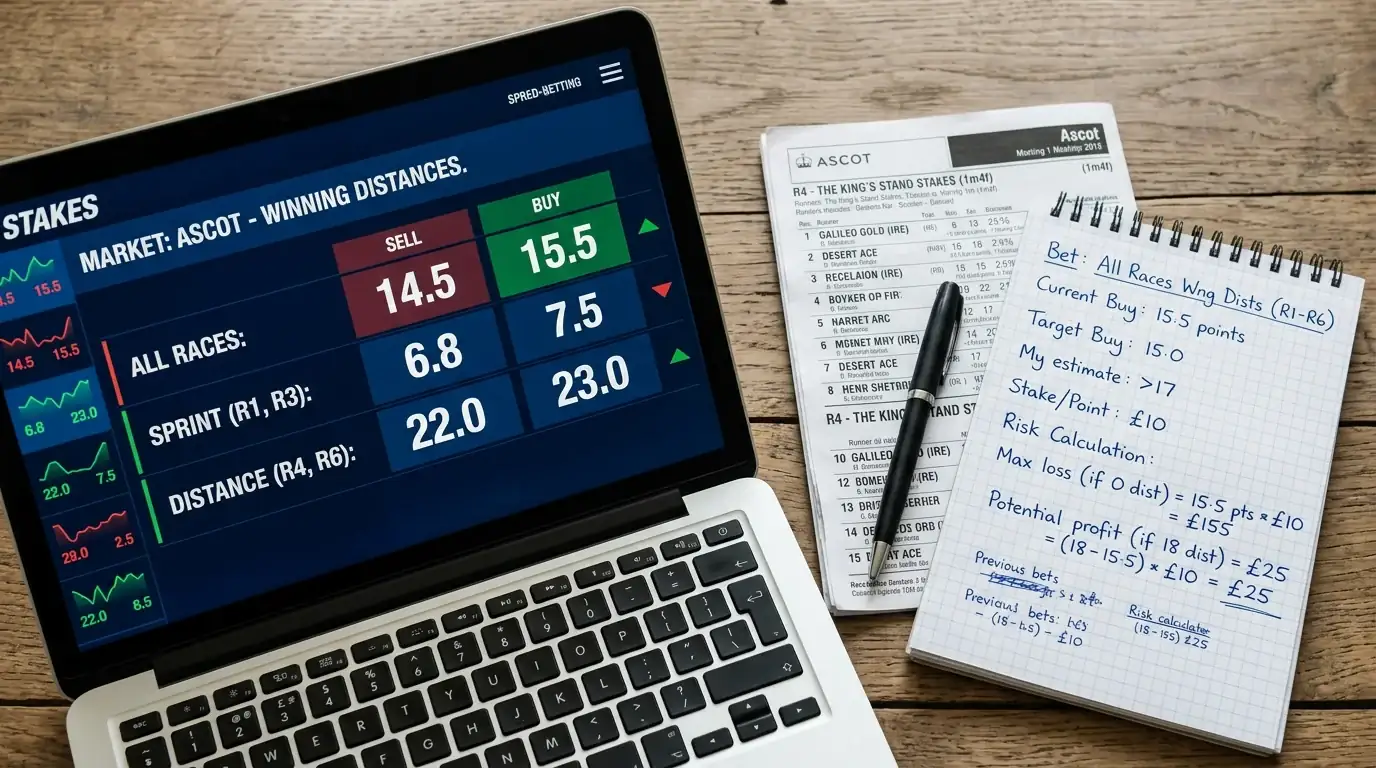
The product that does not have a maximum loss
A friend opened a spread-betting account in 2019 after watching a televised Cheltenham Festival and deciding the winning-distance markets looked like an easy way to play the obvious chases. He had been a fixed-odds punter for years and assumed spread betting was a variation on the same theme. Three days later he was £4,200 down on a single race where the favourite he had “sold” at 4 lengths actually won by 17. His stake had been £100 per length. That is the entire spread-betting product summary in one sentence — you can be wrong by a lot, and the loss scales with how wrong you are.
Spread betting is a niche racing product offered in the UK by two main operators — Spreadex and Sporting Index. The mechanic is fundamentally different from fixed-odds betting on a sportsbook or exchange. You are not betting on whether something happens. You are betting on how much of it happens, and your profit or loss is a per-point multiple of how far the actual result is from the quoted spread. Open-ended risk replaces fixed odds. The product sits under Financial Conduct Authority regulation rather than UK Gambling Commission regulation precisely because of the open-ended exposure profile.
UK racing online turnover fell by 9 per cent in Q1 2025 on the year before, but the spread-betting share of that volume is small and largely held among experienced bettors. The product is not a beginner’s tool, and the people who use it well treat it as a hedging or magnitude-trading instrument rather than a fixed-odds substitute.
Read our detailed review of Tote Betting UK — Pools, Placepot and Jackpot Mechanics.
How spread betting actually works
The cleanest way to grasp the mechanic is with a single market on a single race. Spreadex posts a “winning distance” market on the Gold Cup with a quoted spread of, say, 3.5 to 4.5 lengths. The lower number is the sell price. The higher number is the buy price. You decide which side you want to take.
If you buy at 4.5 lengths for £10 a length, you are betting the winning distance will exceed 4.5 lengths. Every length above 4.5 in the actual result is worth £10 to you. Every length below 4.5 is worth £10 against you. So a winning distance of 8 lengths returns £10 × (8 − 4.5) = £35. A winning distance of half a length returns £10 × (0.5 − 4.5) = −£40.
If you sell at 3.5 lengths for £10 a length, you are betting the winning distance will fall short of 3.5 lengths. Every length below 3.5 makes you money; every length above 3.5 loses you money. A half-length winner returns £10 × (3.5 − 0.5) = £30. A 12-length winner costs £10 × (12 − 3.5) = £85.
The actual result is called the make-up. The make-up is what the spread settles at — the final official winning distance in this example. The make-up is announced after the race, and your profit or loss is calculated as: (make-up − spread) × stake per point, with the sign depending on which side you took.
The crucial difference from fixed-odds. There is no maximum win and no maximum loss baked into the bet. A 17-length winner against a £100-per-length seller at a spread of 4 produces a £1,300 loss on a single race. The seller did not deposit £1,300. The seller’s exposure was open, and the operator collected the loss through the margin account that backs the position.
Total UK racing GGY of £766.7m in the year to March 2025 (per Gambling Commission figures) does not include spread-betting turnover, which is reported separately under FCA rules. The product is structurally outside the gambling regulatory perimeter, which matters for how disputes and customer protection work.
Common racing spread markets
Spread operators run a wider variety of markets on racing than a sportsbook does, because the underlying product is magnitude rather than outcome.
Winning distance. The single most common racing spread. Quoted in lengths. The make-up is the official winning distance. Long shots that win by daylight produce large make-ups; short-priced winners that win by a nose produce small make-ups.
Total runners placed. A whole-race market — how many runners are still in contention to place at a defined point (often the second-last fence in chases). Quoted in number of runners. The make-up is the actual count at that point.
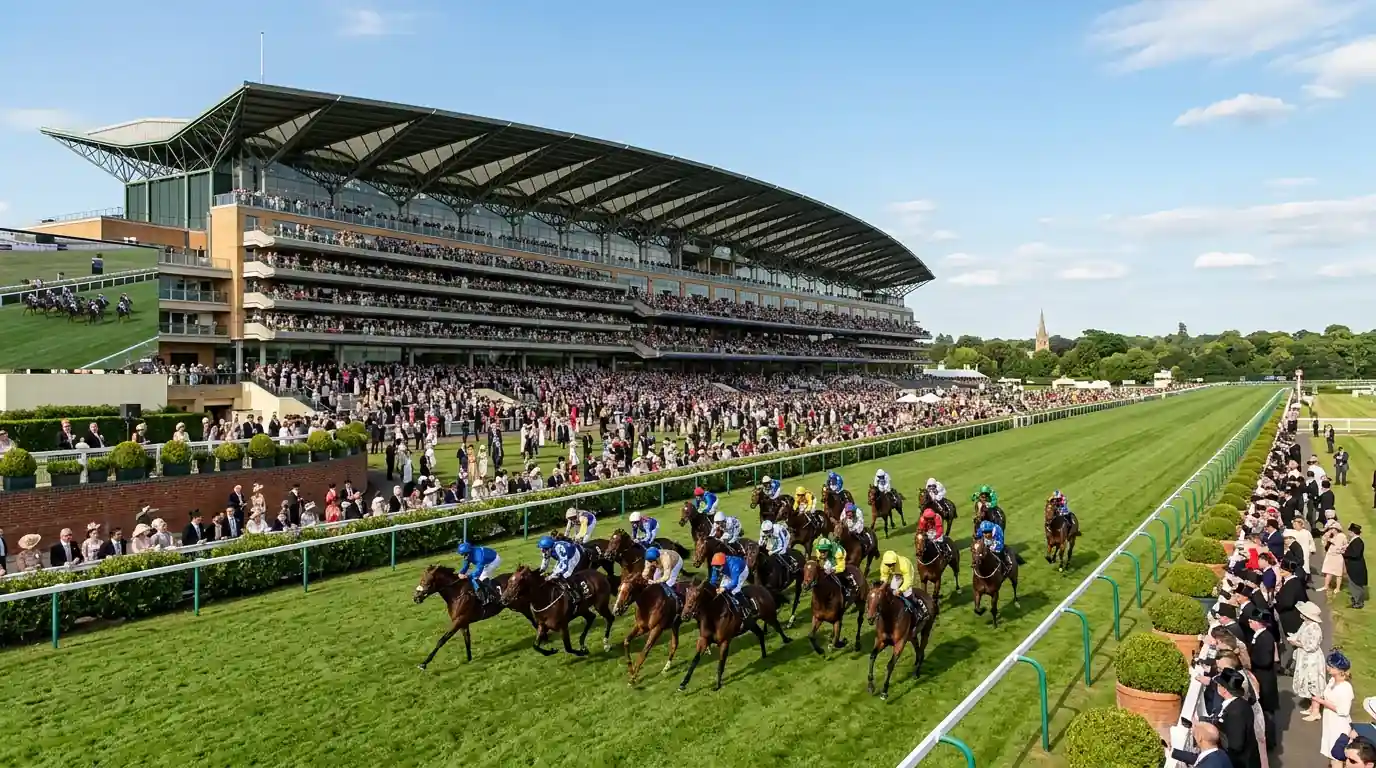
Jockey performance index. A multi-race market quoted on a chosen jockey across a defined festival or meeting. Points are awarded for finishes — typically 25 for a win, 10 for second, 5 for third, scaled by race grade. The spread quotes a points total. Buying a jockey at, say, 32 points means you collect £x per point above 32 if they over-perform across the meeting. Royal Ascot’s five million ITV viewers in 2025 — with the Saturday audience up more than 20 per cent — see exactly the kind of week where jockey indices clear or undershoot spreads dramatically depending on whether the headline jockeys ride winners early.
Trainer performance index. Identical mechanic to jockey performance but with the trainer’s runners across the meeting. Highly correlated with festival success — if the dominant trainer has a strong week, the trainer index clears the spread by a wide margin.
Favourite performance. A market on how favourites collectively perform across a meeting. Favourites winning a strong share of the card produces a high make-up; underdogs winning a lot produces a low make-up.
Total winning distances (cumulative). For festivals — the sum of winning distances across every race on a day, or across a meeting. Cleaner long-shot exposure if you have a view on whether the meeting will produce decisive winners (high cumulative) or close finishes (low cumulative).
Time-based markets. Some operators quote total race time. The mechanic is the same — buy or sell on a quoted seconds spread — but the going variable makes these markets harder to price and less popular as a betting medium.
Find the best options for best betting horse racing.
Open exposure, stop-loss, and the cap that the operator may or may not offer
The single most important practical thing to understand about spread betting is that the loss is open-ended unless you actively cap it. The size of your loss depends on how far the make-up moves against you, multiplied by your stake per point.
The exposure maths. Sell winning distance at 3 lengths for £20 per length. A winning distance of 15 lengths produces a loss of £20 × (15 − 3) = £240. A winning distance of 25 lengths — which happens on jumps races more often than people remember — produces a loss of £20 × (25 − 3) = £440. You did not deposit £440. The operator collected it from your account, and if the account did not have it, from your margin facility.
Stop-loss orders. Many spread operators offer stop-loss positions where you pre-define the maximum loss on a bet. The mechanic is that your position is automatically closed when the running result hits your stop-loss level, capping your loss at the level you defined. Stop-loss orders carry a premium — the spread you trade at is slightly worse — but the cap is the difference between a manageable loss and a runaway one. The most useful discipline I can name for any new spread bettor is to use stop-loss orders by default until you have a sense of how the markets actually behave.
Margin and account funding. Spread accounts require a margin balance that covers the worst-case exposure on every open position. The operator’s risk system calculates margin requirements automatically. If a position moves against you mid-race and the margin requirement exceeds your account balance, the operator will close the position (margin call) — typically with a loss locked in at the prevailing market level. The margin mechanic protects the operator from negative balances and protects the customer from runaway losses, but it can also force you out of a position you would otherwise have held through volatility.
FCA regulation. Spread betting is regulated by the Financial Conduct Authority, not the UK Gambling Commission. The implications are significant. Spread firms must follow FCA conduct of business rules, hold client money in segregated accounts under CASS rules, and follow the FCA’s appropriateness assessment requirements (you must demonstrate financial-instrument knowledge before opening an account). Dispute resolution is through the Financial Ombudsman Service, not through gambling ADR providers. The protections are robust but different from the UKGC framework — and the FCA cap on retail client losses on certain leveraged products (which limits losses to deposited funds for CFDs and similar instruments) does not automatically apply to all spread-betting positions in the same way.
Spread versus fixed odds — where each wins
Spread and fixed-odds are different products solving different problems for the punter.
Fixed-odds wins when you have an opinion on outcome but not on magnitude. “This horse will win” is a fixed-odds bet — you know what you think will happen, you do not need to predict by how much. The maximum loss is the stake, the maximum win is the stake times the odds, and the bet is closed when the race ends. For a fuller view of how spread sits among the other fixed-odds and pool formats, the UK horse racing bet types guide walks through the full set side by side. Most punting on UK racing is about outcome rather than magnitude — and most punters should stay in fixed-odds product accordingly.
Spread wins when you have an opinion on magnitude but not on outcome. “This is going to be a close finish” is a spread bet — sell winning distance, collect if the race is decided narrowly, lose if it is decided by daylight. “The favourite is going to dominate” is a buy on winning distance against the field, regardless of which specific horse wins. Magnitude opinions are rarer than outcome opinions, which is why spread is a niche product.
Tax treatment. UK gambling winnings — including spread-betting winnings — are not subject to income tax or capital gains tax for the recreational punter. The HMRC position is consistent across fixed-odds, exchange and spread products: the operator pays the betting duty, the customer does not. This is one of the few areas where spread betting has an edge over equivalent financial-derivative products (CFDs, equity index trading), which can be subject to CGT depending on the customer’s overall position. The 12.8 per cent drop in UK racing turnover over two years has not changed the tax position for either product.
The pricing comparison. Spread operators bake their margin into the gap between buy and sell quotes (the spread itself). A typical winning-distance market on a major race might be quoted at, say, 4.0 to 5.0 lengths — the operator’s edge is the 1-length gap. The customer always trades at the worse side of the spread for their position. On fixed-odds, the operator’s edge is the overround, typically 108-115 per cent on UK racing. Comparing the two edges directly is hard because the mechanics are different, but as a rough rule, spread betting carries a higher effective operator margin than exchange and a comparable margin to sportsbook on most racing markets.
Why spread is not a starter product
The clean position I have arrived at after watching enough spread punters succeed and fail. Spread betting is a serious tool for serious bettors with a specific view on magnitude rather than outcome. It is not a substitute for fixed-odds betting on the same races, and treating it as such is what produces the £4,200-on-one-race stories. New users should start with small stakes per point, use stop-loss orders by default, and trade only the markets they have a clear opinion on. The FCA regulatory framework gives meaningful customer protections but does not insulate the customer from open-ended losses they actively choose to take. If you cannot articulate what specific magnitude opinion you are expressing on a given market, you have no business trading it.
Why is spread betting regulated by the FCA rather than the UKGC?
Spread betting is treated as a financial product because the position has open-ended risk and is structurally similar to derivatives trading rather than wagering on a defined outcome. The Financial Services and Markets Act 2000 classifies spread-betting firms as financial firms, bringing them under FCA supervision with full conduct-of-business rules, client money segregation under CASS, and Financial Ombudsman Service dispute resolution rather than gambling ADR.
Can spread betting losses exceed my initial deposit?
In principle, yes — spread positions carry open-ended risk and the loss can be larger than the deposited funds if a position moves dramatically against you. Stop-loss orders and the operator’s margin-call mechanism limit this in practice. Some retail accounts are offered with negative-balance protection that caps losses at deposited funds, but this is operator-specific and not a universal feature. Read the account terms before opening.
Published by the Best Betting Horse Racing team.