
Horse Racing Jobs and Economic Footprint UK — Behind the Betting Industry
 Available in US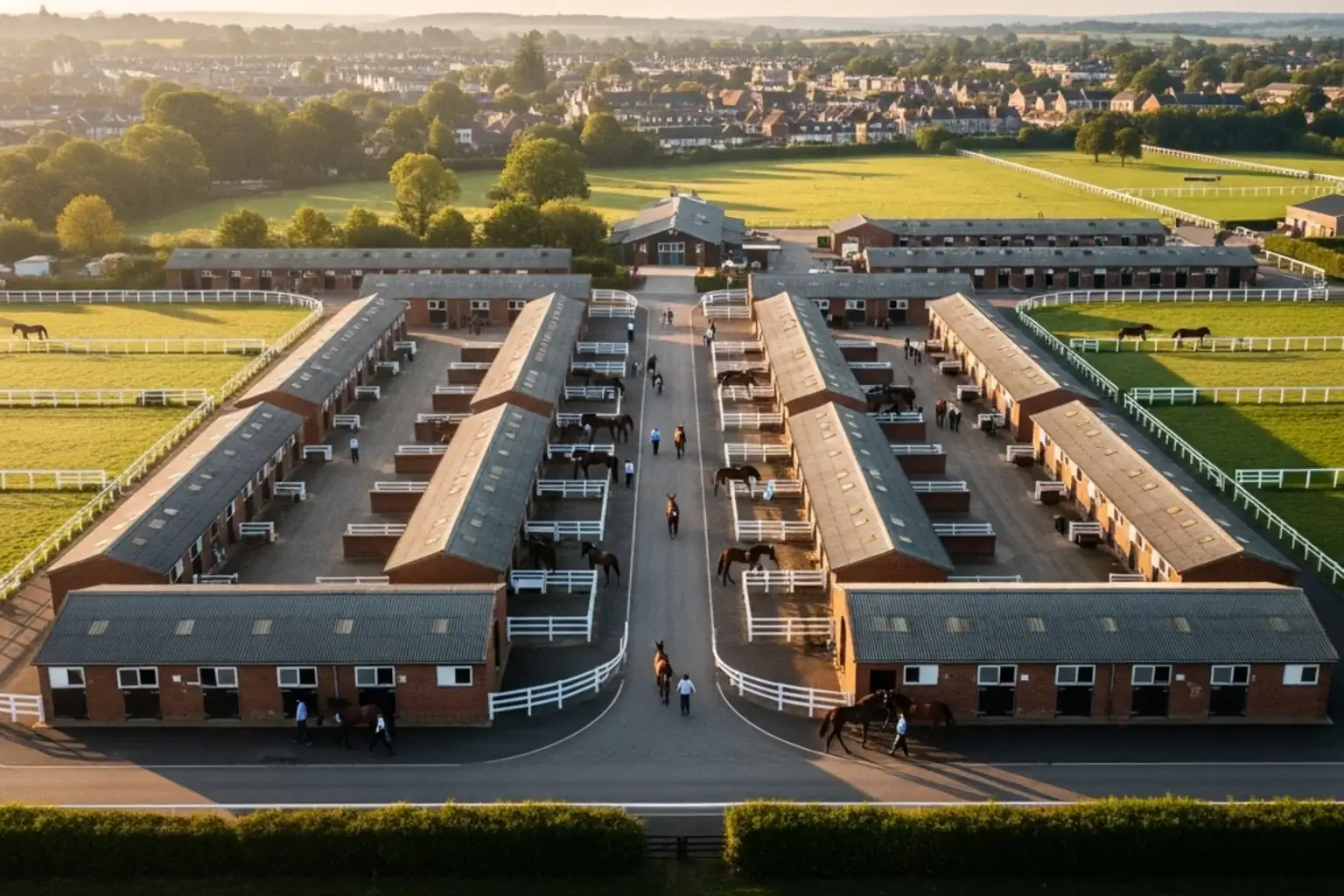
Table of Contents
- The numbers nobody quotes when they talk about betting
- Direct employment — the people in the yards and at the courses
- Indirect and supply chain — the £4bn tax line
- Regional economies — Newmarket, Lambourn, Middleham, Malton
- Jobs under threat — the £250m five-year risk
- The industry footprint in one mental picture
The numbers nobody quotes when they talk about betting
Every time a national newspaper runs a story about gambling regulation, the headline picture is the casual punter, the affordability check, the addiction risk, the operator advertising. The story almost never mentions Newmarket — 50+ training yards in a Suffolk market town of 17,000 residents, with the racing industry’s local employment outweighing every other sector in the area. Or Lambourn — a Berkshire village whose population structure is built around the trainers’ yards on the Wessex Downs. Or Middleham, or Malton, or the dozen smaller training centres scattered across the UK. Racing supports 85,000 jobs in the racing industry itself, and the broader regulated betting sector supports 109,000 jobs across the UK. The combined economic footprint is £6.8bn into the UK economy with £4bn in tax revenue annually. None of these numbers makes it onto a betting slip, but they are the economic context behind every regulatory decision about the sport.
The economic argument matters more than ever because the regulatory pressures of 2025-26 are testing the structural assumptions about how the racing-betting economy holds together. The BHA estimates that operators could lose £900m a year through the affordability check regime and the racing industry could lose £250m over five years through the resulting turnover decline. The numbers are large enough to put a substantial fraction of the 85,000 racing jobs at risk if the operators pull back, and the jobs are concentrated in specific geographic regions where alternative employment is not abundant. This piece walks through the direct employment, the indirect supply chain, the regional concentrations, and the policy risks that affect the broader picture.
Direct employment — the people in the yards and at the courses
The 85,000 racing jobs figure breaks down across several distinct categories of direct employment in the industry itself.
Trainers and stable staff. Around 550 UK trainers hold licences from the BHA, and each one employs stable staff at scale — head lads, work riders, grooms, stable hands. The larger Newmarket and Lambourn yards employ 60-100 staff each. The smaller licensed yards employ 5-15 staff. The total stable staff workforce across UK training yards is around 6,000-7,000 people.
Jockeys and conditional or apprentice riders. The licensed jockey population is around 800 across Flat and jumps codes combined, including the apprentice and conditional riders working their way through the early stage of their careers. The jockey numbers are smaller than the stable staff numbers but the jockey roles are higher-profile and the rider economy supports a wider population of agents, valets, physiotherapists and trainers’ representatives.
Racecourse staff. The 59 UK racecourses employ permanent and event-day staff including stewarding, ground staff, catering, hospitality, security, and administrative roles. The Premier-fixture racecourses employ several hundred permanent staff each, with the event-day workforce scaling up substantially on major race days. Royal Ascot, Cheltenham Festival, the Grand National meeting, and the Ebor Festival deploy thousands of event-day staff across their respective weeks.
Veterinary and ancillary services. Racing veterinary services are a specialist sub-discipline within UK equine veterinary practice, with practices concentrated around the major training centres. The veterinary workforce supporting racing runs into the low thousands across full-time and part-time roles. Farriers, transporters, equine dentists, and other specialist services add further direct employment.
Course-side services. Bookmakers, on-course betting staff, photo-finish operators, race callers, broadcast staff, and the supporting technical infrastructure all employ staff on race days. The on-course bookmaker industry in particular employs several thousand permanent and event-day staff across the UK racecourse circuit.
Indirect and supply chain — the £4bn tax line
Beyond the 85,000 direct jobs, the broader supply chain extends substantially further. The combined regulated betting and racing sectors generate £6.8bn in economic contribution and £4bn in tax revenue annually.
Bloodstock industry. The breeding, sales, and trading of thoroughbred horses is a substantial industry in its own right. Tattersalls in Newmarket, Goffs in Ireland (with substantial UK customer base), and other major bloodstock auction houses turn over hundreds of millions annually. The bloodstock industry employs breeders, stud staff, sales agents, bloodstock journalists, and the supporting financial and legal services around horse trading.
Feed and equipment suppliers. The 15,070 horses in training as of 31 March 2025 each consume specialist feed, hay, bedding, and tack throughout the year. The feed and equipment supply chain runs into hundreds of suppliers across the UK, with concentrations around the major training centres but a national footprint covering smaller yards in every region.
Betting technology. The regulated betting industry’s technology stack — odds compilation, risk management, customer onboarding, payment processing, mobile app development, KYC infrastructure — employs thousands of staff across the UK. The technology workforce is concentrated in London, Manchester, Leeds, and other major UK cities with substantial racing-specific teams alongside broader sports betting technology roles.
Media and broadcasting. ITV Racing, Racing TV, Sky Sports Racing, the Racing Post (print and digital), and the broader specialist racing media employ several thousand staff. The 5 million Royal Ascot ITV audience in 2025 is sustained by a substantial production infrastructure. The 87.6 per cent of UK races starting within two minutes of advertised time in Q1 2025 (up from 79.2 per cent in 2024) reflects the broader operational tightening across racing’s commercial infrastructure, and the staffing levels that support that timeliness.
The £4bn tax contribution. The regulated betting sector contributes £4bn in tax revenue annually through betting duty, corporation tax, employer National Insurance, employee income tax, and VAT on the broader supply chain. The racing industry contributes additional tax revenue separate from the betting tax line, through ownership economics, racecourse operations, and the supporting workforce.
Regional economies — Newmarket, Lambourn, Middleham, Malton
The geographic concentration of UK racing is one of its defining structural features. The training population is clustered around four major centres, with smaller centres scattered across the country, and the local economies are built substantially around the racing industry.
Newmarket. The largest UK training centre, with 50+ licensed training yards within the town and immediate surrounding area. The town’s population of around 17,000 supports a racing workforce of roughly 3,000-4,000 in the yards, plus the supporting infrastructure — vets, farriers, equine feed suppliers, transport, racing media, the bloodstock industry (Tattersalls’ major UK auction operation), the Jockey Club Estates, and the supporting hospitality and retail. The local economy outside racing is modest; the town is structurally a racing town.
Lambourn. The Berkshire training centre on the Wessex Downs, second only to Newmarket in scale. Around 25-30 training yards operate from the Lambourn area, with a similar pattern of supporting infrastructure to Newmarket but on a smaller scale. The Lambourn local economy is again substantially dependent on racing employment, with limited alternative sectors of comparable scale.
Middleham. The North Yorkshire training centre, with around 15 training yards in the immediate area. Middleham’s population is small (around 800 people) and the racing workforce supports a meaningful share of the local employment alongside agriculture and tourism. The town has been a training centre for centuries and the historical continuity is part of its character.
Malton. The other major North Yorkshire training centre, with around 25 training yards in the broader Ryedale area. The Malton workforce supports the regional economy in a similar pattern to the other major centres.
Smaller training centres. Beyond the four main centres, training operations are spread across the UK at smaller scale. Epsom Downs, Manton, Pulborough, Salisbury, and a dozen smaller locations all support local training operations. The combined effect is a national footprint where racing employment touches communities across England, Scotland and Wales.
The local multiplier. Local economic analysis suggests every direct racing job in a training centre supports roughly 1.5-2.0 additional jobs in the local supply chain — feed suppliers, equine veterinary practices, transport companies, hospitality serving the visiting owners, racing media operating locally. The multiplier effect is what makes the racing industry’s regional concentrations more economically significant than the headline 85,000 direct-jobs figure suggests.
Jobs under threat — the £250m five-year risk
The BHA’s economic modelling published through 2025 includes a specific estimate of the employment risk from the regulatory changes affecting the sport. The headline figure is that the racing industry could lose £250m over five years through the affordability check regime and the resulting decline in betting turnover. The figure is significant enough to put a substantial fraction of the racing workforce at risk if the projected pressure materialises.
The mechanism. Affordability checks reduce online racing betting volume (already down 12.8 per cent over two years and 9 per cent in Q1 2025 alone). Lower betting volume reduces the Levy yield in subsequent years (despite the current record £108.9m yield reflecting margin expansion on a contracting customer base). Lower Levy yield reduces prize money support, particularly at grass-roots fixtures (where prize money already fell £3.6m in 2025). Lower grass-roots prize money squeezes owner economics. Owners exit the sport. Horses in training decline (already 15,070 horses, down 1.9 per cent on the year, with a 6-7 per cent BHA forecast decline in runners by 2027). Trainers’ yards contract. Stable staff lose jobs. The supply chain — feed suppliers, vets, farriers, transporters — contracts in proportion to the reduced workforce.
The geographic concentration. The job losses, if they materialise, will be concentrated in the four major training centres and the smaller regional centres. Newmarket, Lambourn, Middleham, Malton — the places where alternative employment of comparable scale is not abundant — would bear a disproportionate share of the impact. The post-Budget statement from the British Horseracing Authority captured the political dimension when it observed that betting on racing is an integral part of the enjoyment of our sport, and that maintaining the rate of horserace betting duties is an important step by the Government to help preserve revenue streams and protect the 85,000 jobs supported by the racing across the country.
The mitigation. The 2025 Budget’s protection of the racing-specific 15 per cent GBD rate, the HBLB’s record £77.1m funding package for 2026, the Jockey Club’s record £61.47m prize money commitment across 15 racecourses, and the continued operator-side support for festival meetings all serve to mitigate the structural pressures. Whether the mitigation is sufficient to prevent the £250m five-year loss depends on whether the affordability check regime is reformed in a way that reduces customer friction, whether operators continue to support racing concessions through the post-2027 GBD changes, and whether the racing industry’s broader commercial relationships hold up under the pressures. For more on the Budget changes that determine the regulatory framework, the UK Budget 2025 betting impact guide covers the tax changes that sit alongside the employment picture.
The industry footprint in one mental picture
The headline numbers. 85,000 jobs in the UK racing industry. 109,000 jobs in the broader regulated betting sector. £6.8bn economic contribution to the UK economy annually. £4bn in tax revenue. Four major training centres at Newmarket, Lambourn, Middleham and Malton, with the workforce concentrated in regional economies where alternative employment is limited. £250m projected five-year racing industry loss if the affordability check regime continues to depress betting turnover. The economic case for protecting racing’s regulatory framework is built on this footprint, and the policy decisions through 2026-27 will determine how much of it remains intact by 2030. The numbers are not abstract. They sit behind every yard in Newmarket, every gallop in Lambourn, every stable staff member’s pay packet across the UK racing industry, and every regulatory decision about the betting framework that funds the sport.
How does the racing industry’s tax contribution compare with football?
The combined regulated betting and racing sector contributes around £4bn in tax revenue annually to the UK exchequer. Football’s direct tax contribution at the Premier League and Football League level is significant but operates through a different mechanism — primarily through player and staff income tax, employer National Insurance, broadcast rights VAT, and corporation tax on club profits. The two sports’ contributions are not directly comparable on a like-for-like basis, but racing’s tax line includes the substantial betting duty contribution that is specific to gambling-linked sports.
Why are training yards concentrated around Newmarket and Lambourn?
Both centres developed historically because the local terrain provides excellent training gallops — the chalk downland at Newmarket and the rolling Wessex Downs at Lambourn both produce well-drained, springy turf that horses gallop on without injury. The historical concentration creates network effects — vets, feed suppliers, farriers and transport operators cluster where the demand is greatest, which makes the locations more attractive to new trainers, which reinforces the concentration. The pattern has been stable for over a century and is unlikely to shift substantially in the foreseeable future.
Prepared by the Best Betting Horse Racing editorial staff.